Professional Fire Damage Restoration Across Florida
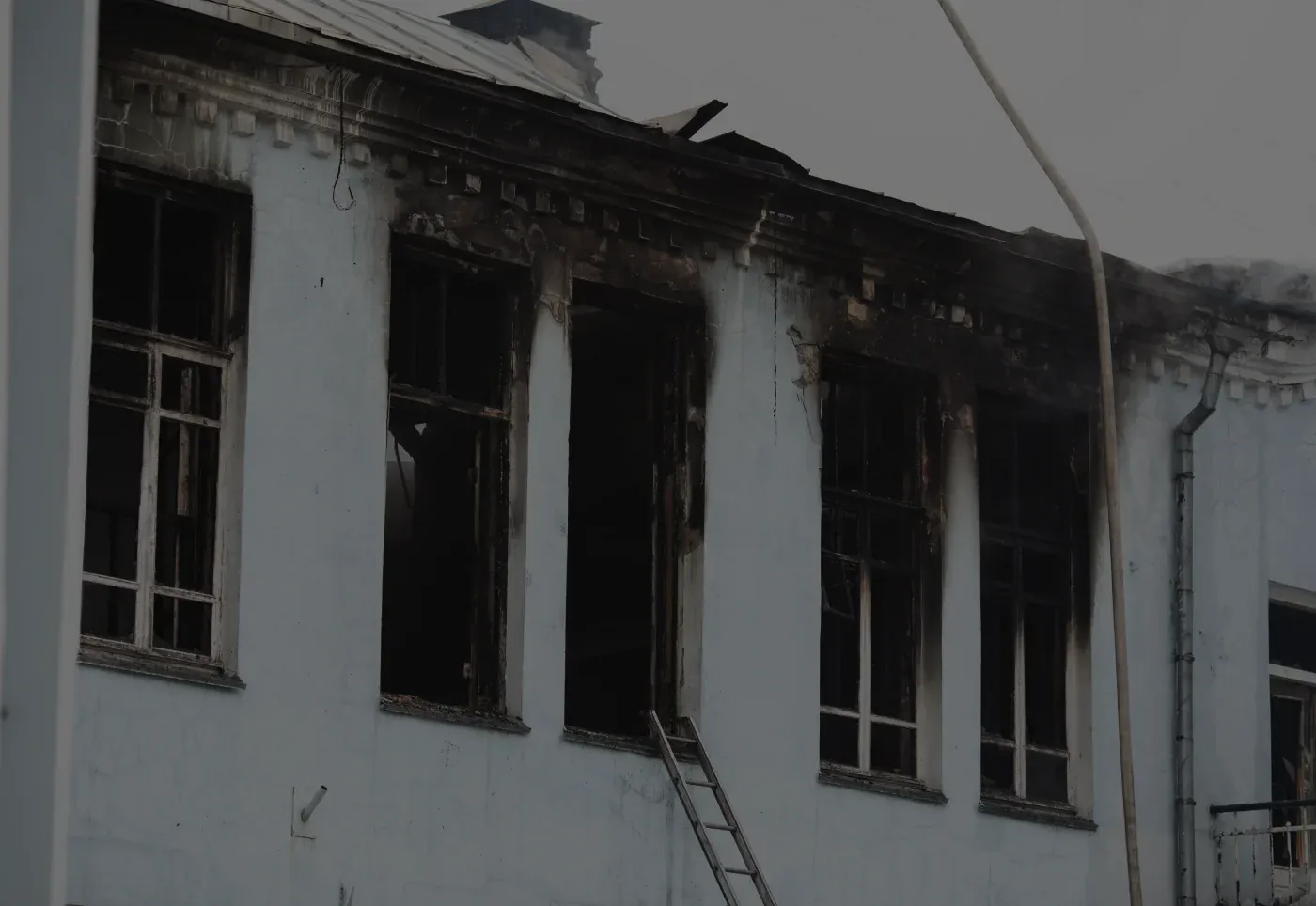
Florida records over 15,000 residential structure fires annually — ranking among the top five states for fire frequency — with a cause profile that is distinctly different from northern states. Florida is the undisputed lightning capital of the United States, receiving an average of 1.4 million cloud-to-ground lightning strikes per year, with the I-4 corridor between Tampa and Daytona Beach experiencing the highest strike density. Lightning-caused structure fires represent a significant percentage of Florida's total, striking homes directly through roof penetrations, along plumbing and electrical conduits, and through ground current that enters via underground utilities. This lightning-specific fire risk, combined with year-round air conditioning electrical loads and aging wiring in 1970s-1990s construction, gives Florida a unique fire risk fingerprint.
The secondary damage timeline after a fire in Florida is dramatically compressed compared to northern states. In a state where ambient humidity averages 74% and indoor temperatures remain above 70 degrees year-round, firefighting water left in the structure begins producing mold growth within 24 hours — while soot residue becomes permanently bonded to surfaces within 48-72 hours as humidity-accelerated chemical reactions convert acidite residues into corrosive compounds. This compressed timeline means that Florida fire restoration must begin with emergency moisture control and soot stabilization within hours of fire department clearance, not the days or weeks that might be acceptable in a dry, cool climate.
Florida fire damage insurance claims are processed through a carrier landscape that has experienced unprecedented instability. With six carriers entering receivership or insolvency since 2020, and Citizens Property Insurance Corporation (the state's insurer of last resort) now holding over 1.3 million policies, claim processing timelines and practices vary dramatically. Heritage Insurance, Universal Property, American Integrity, Security First, and Slide Insurance each have different managed repair programs, documentation requirements, and depreciation schedules for fire claims. Our team maintains current relationships and process knowledge with every active Florida carrier, ensuring that documentation is formatted for the specific carrier handling your claim.
Florida fire restoration requires specialized knowledge of the state's construction methods. Most Central Florida homes are concrete block construction (CBS) with wood-framed roof systems, stucco or siding exteriors, and concrete slab foundations. A typical fire scenario damages the wood roof structure and attic contents while the CBS walls survive structurally — but absorb soot and smoke odor deep into the porous block and stucco. Restoration of CBS structures requires thermal fogging, ozone treatment, or hydroxyl generator deodorization that penetrates the block's porous structure, combined with sealant encapsulation of smoke-damaged surfaces. Simply painting over soot-damaged CBS walls without proper preparation results in odor breakthrough and staining within months.
The HVAC implications of fire damage in Florida are more severe than anywhere else in the country. Florida homes run central air conditioning 10-12 months per year, and the air handler and ductwork system serves as a highway for smoke and soot distribution during a fire. Even a kitchen fire confined to a single room sends combustion byproducts through the return air system, contaminating every supply register, the evaporator coil, the blower assembly, and potentially every room in the house. Our fire restoration protocol immediately isolates the HVAC system on arrival, then includes complete ductwork cleaning, coil decontamination, blower motor cleaning, and filter replacement before the system is reactivated — preventing the ongoing redistribution of soot and odor that makes affected homes uninhabitable long after the fire is out.
Why Choose Restoration Control for Fire Damage Restoration in Florida
Emergency board-up, roof tarping, and HVAC isolation within 2-4 hours of fire department clearance — preventing secondary water and smoke migration damage in Florida's humid environment
Humidity-controlled water extraction from firefighting operations — preventing the mold colonization that begins within 24 hours in Florida's 74% ambient humidity when water is left standing
Lightning damage assessment protocol — comprehensive evaluation of electrical systems, appliances, structural roof penetrations, and ground current damage paths unique to Florida's 1.4 million annual lightning strikes
Xactimate-formatted documentation accepted by all active FL carriers — Citizens, Heritage, Universal, American Integrity, Security First, and Slide — with carrier-specific supplementing when initial estimates are underpaid
CBS (concrete block structure) smoke deodorization — thermal fogging, ozone, and hydroxyl generator treatments that penetrate porous block and stucco construction used in 80%+ of Central Florida homes
Complete HVAC decontamination included — ductwork cleaning, evaporator coil treatment, blower motor degreasing, and filter replacement preventing smoke redistribution through the 10-12 month/year AC system
Content pack-out and restoration in climate-controlled facility — protecting personal belongings from Florida's heat and humidity during the restoration period, with itemized inventory for insurance documentation
Asbestos and lead testing for pre-1985 Florida construction — required before demolition of popcorn ceilings, vinyl floor tiles, and pipe insulation common in Florida homes from the 1960s-1980s building boom
Fire Damage Restoration Challenges in Florida
Every state has unique conditions that affect fire damage restoration. Here's what Florida homeowners face and how we address it.
Lightning-Caused Structure Fires
Florida's 1.4 million annual lightning strikes cause fires through direct roof strikes, current flowing through electrical and plumbing systems, and side flashes to structures from nearby trees. Lightning fires often originate in attic spaces where the strike superheats wiring or ignites insulation, making them difficult to detect until significant damage has occurred. Our assessment includes full electrical system evaluation with a licensed electrician, inspection of all roof penetrations for strike evidence, and documentation of surge damage to electronics and appliances — all commonly covered under Florida homeowners policies as a named peril.
Accelerated Soot Corrosion in Florida Humidity
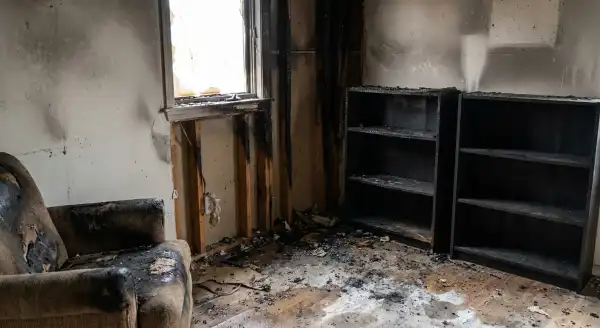
Soot residue from structure fires contains sulfur compounds, hydrochloric acid, and organic acids that undergo accelerated chemical reactions in humid environments. At Florida's 74% average humidity, these compounds corrode chrome, copper, brass, and nickel plating within 24-48 hours — permanently damaging fixtures, appliances, and electronics that could otherwise be cleaned and salvaged. Our protocol begins soot stabilization on all metal surfaces within the first visit, applying corrosion-inhibiting compounds that arrest the chemical reaction until thorough cleaning can be completed.
HVAC Cross-Contamination in Year-Round AC Homes
Florida homes operate air conditioning systems 10-12 months annually, with air handlers pulling 400-1,200 CFM through centralized ductwork. During a fire, the running HVAC system actively draws smoke and soot into the return air plenum and distributes it to every supply register in the house — contaminating rooms that had no direct fire exposure. We immediately isolate the HVAC system upon arrival and do not permit reactivation until the entire air handling system — including the evaporator coil, condensate pan, blower assembly, and all ductwork — has been professionally cleaned and verified.
Porous CBS Wall Smoke Absorption
Central Florida's predominant concrete block structure (CBS) construction creates a unique deodorization challenge. Concrete block is highly porous, absorbing smoke odor molecules deep into the masonry where surface cleaning cannot reach. Stucco exterior finishes compound the problem by trapping odor within the wall assembly. Effective treatment requires thermal fogging agents that penetrate block pores, followed by sealant encapsulation (Kilz or BIN shellac primer) on all exposed block surfaces before finish painting. Simply painting over smoke-damaged block without these steps results in persistent odor and stain breakthrough.
Post-Fire Mold From Firefighting Water
Fire department suppression operations deposit hundreds to thousands of gallons of water into the structure, saturating insulation, drywall, flooring, and contents. In Florida's warm, humid environment, this water creates mold colonization conditions identical to a water damage event — with the added complication of soot contamination in the water. Our fire restoration protocol addresses the water damage component simultaneously with smoke damage: extraction within hours, commercial dehumidifiers deployed immediately, and antimicrobial application to all wet structural surfaces.
Fire Damage Restoration in 7 Florida Cities
Click your city for local fire damage restoration details, scheduling, and pricing.
Roofing, Siding, Gutters & Remodeling in Fire Damage Restoration, FL
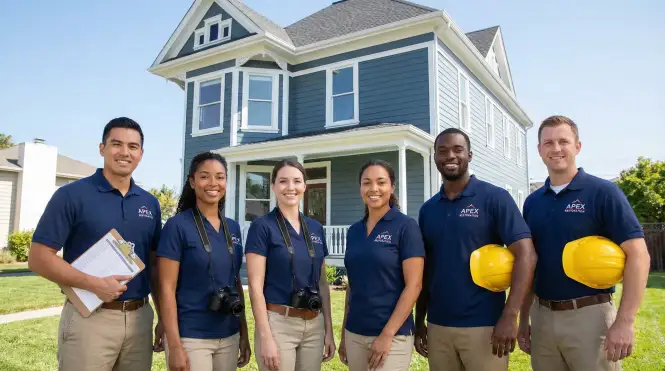
Restoration Control serves Fire Damage Restoration, Florida with professional roofing, siding, seamless gutter installation, kitchen remodeling, bathroom remodeling, and 24/7 emergency restoration services. Our Fire Damage Restoration-area crews are licensed FL contractors who carry full general liability and workers compensation insurance, hold active state contractor licenses, and bring IICRC certifications to every restoration project. We provide free on-site inspections and written estimates at no charge or obligation to homeowners and commercial property owners throughout Fire Damage Restoration and surrounding communities.
Restoration Control has completed roofing, siding, and remodeling projects in Fire Damage Restoration neighborhoods and understands the local building codes, permit requirements, and common weather-related damage patterns in this area. When your project involves an insurance claim — whether from storm damage, water intrusion, fire, or hail — our team documents all damage, prepares detailed estimates in the format your carrier requires, and coordinates directly with your adjuster to ensure a fair settlement. Call (833) 380-7378 to schedule your free Fire Damage Restoration inspection.
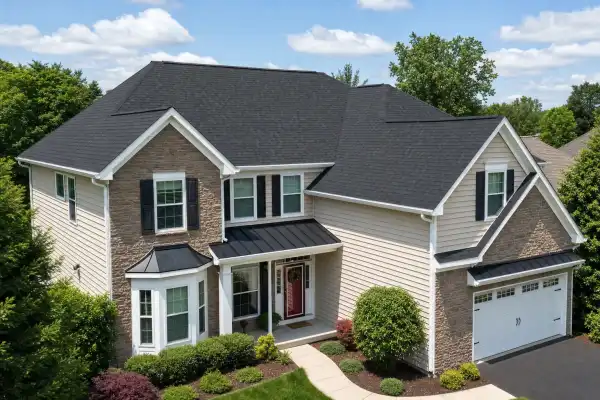
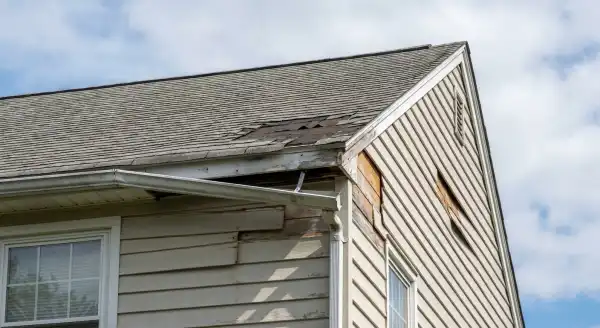
Residential and commercial roofing including storm damage repairs, full roof replacements, emergency tarping, and new construction roofing. Architectural shingles, metal roofing, tile, and flat systems available with manufacturer warranties. Free inspection and insurance claims assistance in Fire Damage Restoration.
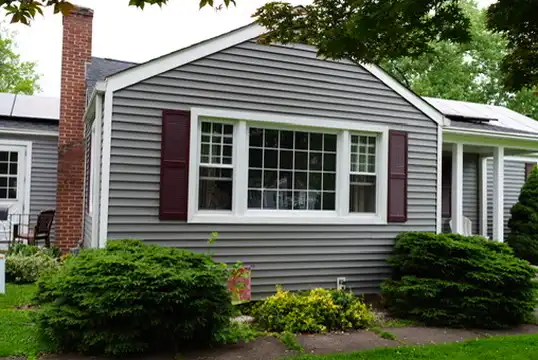
Vinyl, fiber cement, engineered wood, and cedar siding installation and replacement. Storm damage siding repair with insurance coordination. Proper house wrap and insulation installation for improved energy efficiency in Fire Damage Restoration homes.
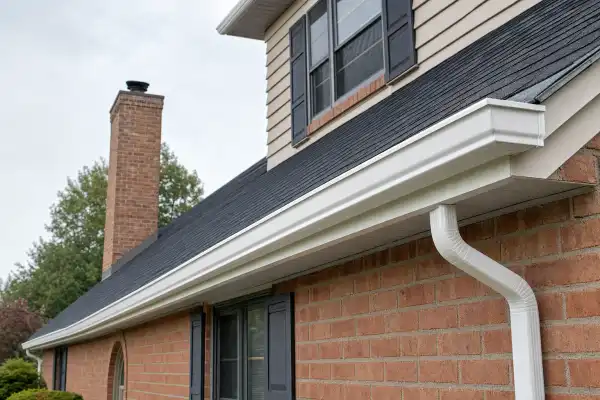
Custom seamless aluminum gutters fabricated on-site to fit your Fire Damage Restoration home. Complete gutter systems with downspouts and extensions. Micro-mesh gutter guard installation to reduce maintenance and protect your foundation.
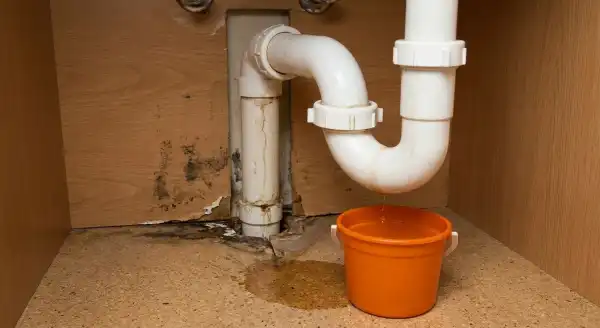
24/7 emergency water extraction, structural drying, and mold prevention. IICRC-certified technicians respond within 1-3 hours of your call in Fire Damage Restoration. Full insurance claims documentation and rebuild services.
Emergency board-up, smoke and soot cleanup, structural repairs, and complete rebuild after fire in Fire Damage Restoration. IICRC-certified team works directly with your insurance company throughout the restoration process.
Emergency tarping and board-up after severe weather, plus complete roof, siding, and structural rebuild. Our Fire Damage Restoration storm teams respond 24/7 and manage all insurance claim documentation and adjuster coordination.
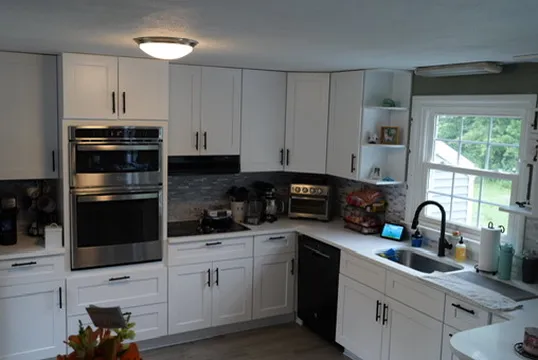
Full-service kitchen renovation including custom cabinets, stone countertops, backsplash, and appliance coordination. Licensed FL contractors managing your Fire Damage Restoration kitchen project from design to final inspection.
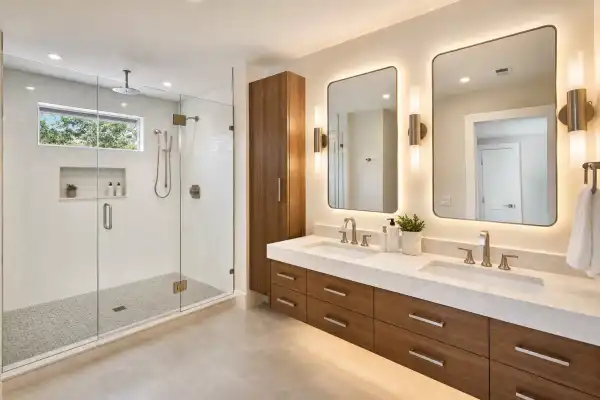
Walk-in shower installations, tub-to-shower conversions, vanity upgrades, and complete bathroom renovations in Fire Damage Restoration. All trades in-house: plumbing, electrical, tile, carpentry, and painting.
Why Fire Damage Restoration Homeowners Choose Restoration Control
Licensed FL contractor — license numbers available on request and verifiable with the state
IICRC-certified restoration technicians for water, fire, and mold emergencies
Free on-site inspection and written estimate for every project in Fire Damage Restoration
Insurance claims coordination with all major carriers
24/7 emergency response for storm, water, and fire damage in Fire Damage Restoration
Full in-house crews — no unlicensed subcontractors
Workmanship warranty on all completed projects
What Fire Damage Restoration Customers Say
"Restoration Control replaced our roof after a major storm. The whole process was seamless — they handled everything with our insurance company and the roof looks great. Couldn't be happier with the crew they sent out."
"We had water damage from a burst pipe and they were at our house within 2 hours. They dried everything out quickly, documented the damage for our claim, and repaired the ceiling and walls perfectly. Very professional team."
Schedule a Free Inspection in Fire Damage Restoration
Call (833) 380-7378 or fill out the form below. We serve Fire Damage Restoration and surrounding areas throughout Florida.