Professional Water Damage Services — Licensed CT Contractor
Water Damage Restoration in Wallingford
Water damage in Wallingford follows the Quinnipiac River corridor and the aging infrastructure patterns in the town's post-war housing stock — two converging risks that create year-round water damage potential. The Quinnipiac has demonstrated flood capacity repeatedly — the river's constrained channel through central Wallingford overtops during extreme rain events, affecting properties along Quinnipiac Street, Hall Avenue, and the Community Lake area where the river passes through an impoundment that can contribute to upstream flooding when discharge is limited.
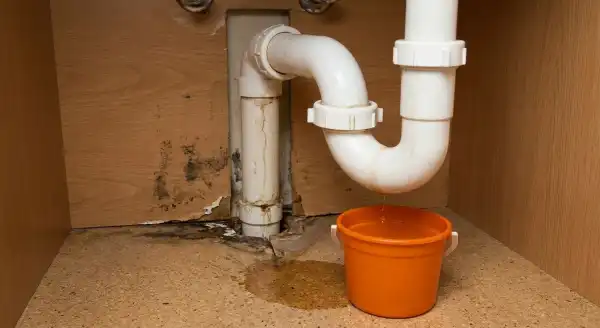
But river flooding is episodic, occurring during the most extreme weather events. The daily reality of water damage in Wallingford comes from inside homes — aging plumbing infrastructure that fails in predictable patterns as it approaches end-of-life. Wallingford's post-war homes along Cook Hill Road and throughout the Route 5 corridor were plumbed with galvanized steel supply lines and cast-iron drain stacks now 50 to 75 years old. Galvanized supply lines corrode from the inside, gradually narrowing the water pathway until a weakened joint fitting bursts — typically behind a finished wall where the leak may run for hours before anyone notices the expanding ceiling stain or hears water flowing when no fixture is open.
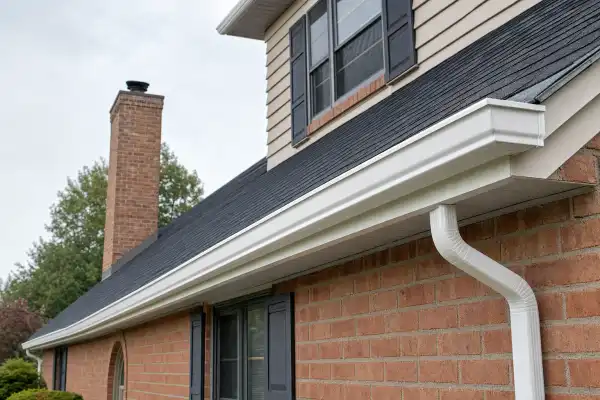
Ice dam intrusion from January through March adds a seasonal wave of water damage that affects Wallingford's under-insulated capes community-wide — the same insulation deficiency that creates ice dams on one cape creates identical conditions on every cape of the same vintage on the same street. Our emergency teams deploy to Wallingford with commercial extraction equipment, industrial dehumidifiers, and antimicrobial treatments, prioritizing the first 24 hours where prompt intervention prevents mold colonization in wall cavities and limits the scope of demolition required during restoration.
“After a burst pipe flooded our basement during a January freeze, Restoration Control arrived within an hour. Their team was professional, thorough, and kept us informed every step of the way. They handled our insurance claim and had our home restored in under two weeks. We could not have asked for a better experience.”
Robert & Linda M.
Hartford, CT
“A nor'easter ripped shingles off our Shippan Point home and water was pouring into the attic. Restoration Control had a crew on our roof the next morning, tarped the damage, and completed a full replacement within the week. Their knowledge of coastal roofing materials made all the difference.”
Jennifer S.
Stamford, CT
“We hired Restoration Control to replace the original siding on our 1920s Colonial in East Rock. They matched the historic character perfectly while upgrading to fiber cement that will actually withstand Connecticut winters. The craftsmanship is outstanding and the crew was respectful of our neighborhood.”
David & Maria T.
New Haven, CT
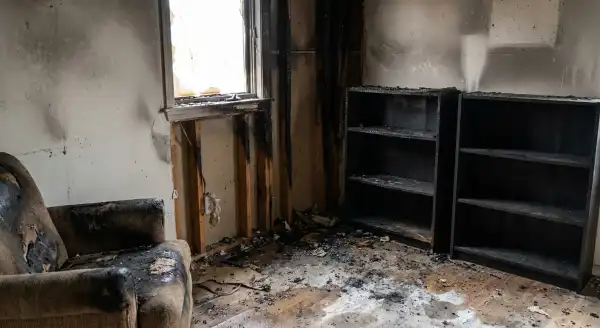
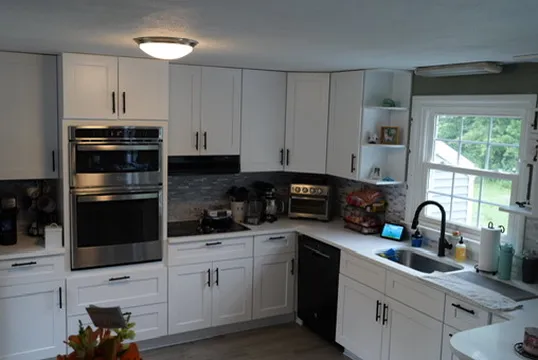
“After a kitchen fire, we were devastated. Restoration Control not only restored our home but helped us navigate the insurance process from start to finish. Their fire damage team removed all smoke odor and rebuilt our kitchen better than before. True professionals who treated us like family.”
Thomas K.
Bridgeport, CT
Frequently Asked Questions
Need Water Damage in Wallingford?
Call now for a free estimate. Our Wallingford team responds within 60–90 minutes, 24 hours a day, 7 days a week.
Water Damage Restoration in Wallingford, CT — Licensed Contractor
Water damage in Wallingford follows the Quinnipiac River corridor and the aging infrastructure patterns in the town's post-war housing stock — two converging risks that create year-round water damage potential. The Quinnipiac has demonstrated flood capacity repeatedly — the river's constrained channel through central Wallingford overtops during extreme rain events, affecting properties along Quinnipiac Street, Hall Avenue, and the Community Lake area where the river passes through an impoundment that can contribute to upstream flooding when discharge is limited.
But river flooding is episodic, occurring during the most extreme weather events. The daily reality of water damage in Wallingford comes from inside homes — aging plumbing infrastructure that fails in predictable patterns as it approaches end-of-life. Wallingford's post-war homes along Cook Hill Road and throughout the Route 5 corridor were plumbed with galvanized steel supply lines and cast-iron drain stacks now 50 to 75 years old. Galvanized supply lines corrode from the inside, gradually narrowing the water pathway until a weakened joint fitting bursts — typically behind a finished wall where the leak may run for hours before anyone notices the expanding ceiling stain or hears water flowing when no fixture is open.
Ice dam intrusion from January through March adds a seasonal wave of water damage that affects Wallingford's under-insulated capes community-wide — the same insulation deficiency that creates ice dams on one cape creates identical conditions on every cape of the same vintage on the same street. Our emergency teams deploy to Wallingford with commercial extraction equipment, industrial dehumidifiers, and antimicrobial treatments, prioritizing the first 24 hours where prompt intervention prevents mold colonization in wall cavities and limits the scope of demolition required during restoration.
Common Water Damage Restoration Problems in Wallingford
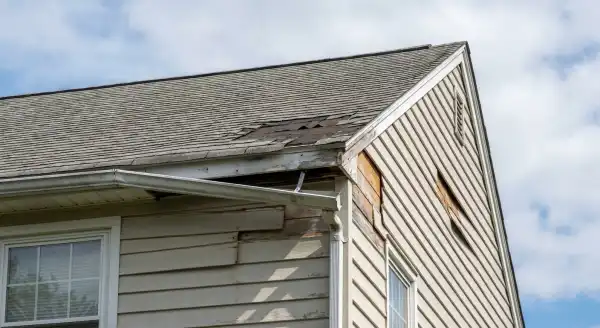
Ice dam intrusion is Wallingford's most common insured water damage category, concentrated in post-war capes along Cook Hill Road and Ward Street Extension where original attic insulation allows heat loss that melts snow on the roof surface while eave temperatures remain below freezing. The resulting ice dams push water under shingles and into the roof deck, where it follows gravity down the inside of the exterior wall — saturating insulation, soaking wall plates, and creating conditions where mold can colonize within 48 hours in heated interior spaces. Homeowners typically discover the damage when ceiling stains appear or paint begins to bubble — by that point, concealed wall damage may be extensive.
Supply-line failures from aging galvanized plumbing create the most catastrophic single-event water damage because they deliver water under domestic pressure — 40 to 60 PSI — continuously until someone reaches the main shutoff valve. A burst supply line in a second-floor bathroom can send water through the first-floor ceiling, saturate walls on both levels, and pool in the basement — a three-story damage path from one corroded fitting. These events generate the largest individual claims and the most extensive restoration scope.
Sewer backup during intense rain events affects older Wallingford neighborhoods where aging sewer infrastructure cannot handle the volume of increasingly intense storms, pushing contaminated Category 3 water into basement drains. Category 3 contamination requires the most extensive remediation protocols — removal of all porous materials that contacted sewage, antimicrobial treatment of all structural surfaces, and thorough structural drying before any reconstruction begins. The Quinnipiac River's influence on groundwater levels means basement water intrusion can occur even without direct river flooding — elevated water tables during wet seasons push moisture through foundation walls and floor joints throughout the valley-floor neighborhoods.
Water Damage Restoration Regulations in Wallingford, CT
Water damage restoration in Wallingford must comply with Connecticut Department of Public Health guidelines for mold remediation when mold is present or suspected — which in Wallingford's Quinnipiac valley humidity is the majority of cases where water has been present for more than 24 to 48 hours. FEMA flood zone properties along the Quinnipiac face substantial damage determination requirements if flood damage exceeds 50 percent of the structure's assessed value — potentially requiring elevation or flood-proofing modifications to meet current standards before repair can proceed.
Connecticut HIC registration is required for all restoration work exceeding $200 in value. Lead paint and asbestos testing is mandatory before demolition of any materials in pre-1978 homes — Wallingford has a substantial inventory of pre-1978 housing in the Cook Hill corridor and older sections of town. Insurance documentation standards require detailed moisture mapping with meter readings documented at each affected area, photographic documentation of all damage before any remediation work begins, and written scope-of-work approval from the insurance carrier's adjuster before reconstruction can start.
Water Damage Restoration by Neighborhood in Wallingford
The Quinnipiac River corridor and Community Lake area face the highest flood risk in Wallingford — properties in this zone have experienced repeated flooding events during major storms, and homeowners should maintain active flood insurance regardless of whether their property currently falls within the FEMA-mapped flood zone, as flood maps are periodically revised and may not reflect current risk.
Cook Hill Road's post-war homes produce the highest volume of water damage calls from plumbing failures and ice dam intrusion — the aging infrastructure in these 1950s-1960s homes generates predictable failure patterns that our teams encounter throughout the winter and spring seasons. Main Street's historic homes require preservation-grade restoration for water-damaged plaster walls, wide-plank hardwood floors, and architectural woodwork that cannot be replaced with modern materials. Yalesville's older farmhouses have both plumbing age and foundation permeability issues that create dual water damage risk — aging pipes above and seeping foundations below. North Farms' newer homes see water damage primarily from ice dams on complex roof geometries where valleys and dormers create snow accumulation points.
Why Wallingford Needs Professional Water Damage Restoration
Wallingford's water damage risk combines Quinnipiac River flood exposure with aging plumbing infrastructure throughout the post-war housing stock — two independent risk factors that create year-round potential for water damage events. Professional response within the first 24 hours limits damage to affected materials at manageable cost — extraction removes standing water, commercial dehumidifiers and air movers dry the structure to target moisture levels, and antimicrobial treatment prevents mold colonization. Delayed response allows moisture to migrate through wall cavities, subfloor assemblies, and framing where mold remediation requires extensive demolition and reconstruction at several times the early-intervention cost.
For Wallingford homeowners, having a restoration contractor's emergency number programmed into your phone and understanding your insurance coverage before an event occurs is not overcaution — it is essential preparation in a town where aging plumbing, heavy snowfall creating ice dams, and river-influenced groundwater create water damage potential in every season.
What's Included in Our Wallingford Water Damage Restoration Service
Emergency water extraction with truck-mounted equipment
Structural drying with industrial air movers and dehumidifiers
Moisture mapping and thermal imaging documentation
Contaminated water (Category 2/3) removal and disinfection
Mold prevention treatment and monitoring
Full repair and rebuild of damaged walls, floors, and ceilings
Why Wallingford Homeowners Choose Restoration Control for Water Damage Restoration
Licensed CT contractor — active state license verifiable online
IICRC-certified technicians with manufacturer-authorized installation training
Free on-site inspection and written estimate with no obligation in Wallingford
Full insurance claims support — documentation, Xactimate estimates, adjuster meetings
In-house crews only — no unlicensed subcontractors on your Wallingford project
Workmanship warranty backed by a company with 10+ years in Connecticut
24/7 emergency line for storm, water, and fire damage in Wallingford
BBB Accredited with A+ rating and 4.9-star average from 250+ reviews
Our emergency dispatch team answers 24/7 and we aim to have a crew on-site within 1-3 hours of your call anywhere in Florida, Connecticut, or New Jersey. Fast response is critical — mold can begin to grow within 24-48 hours of moisture exposure.
Will my insurance cover water damage restoration?
Sudden and accidental water damage (burst pipe, appliance failure, ice dam) is typically covered by homeowner's insurance. Gradual leaks and flood damage from outside sources may require separate coverage. We document all damage thoroughly and work directly with your adjuster to maximize your claim.
What is the drying process?
After water extraction, we place industrial air movers and dehumidifiers strategically to dry the structure from the inside out. We use moisture meters and thermal imaging cameras to monitor progress daily. Average dry-out time is 3-5 days depending on material types and saturation level.
Request Water Damage Restoration in Wallingford, CT
Call (833) 380-7378 or complete the form below. A licensed CT estimator will contact you within 1 business hour to schedule your free on-site inspection.