Professional Storm Damage Services — Licensed CT Contractor
Storm Damage Restoration in Wallingford
Storm damage in Wallingford reflects the town's position in the Quinnipiac River valley where weather systems deliver their full range of severity — snow, ice, wind, hail, and intense rainfall — throughout the year. Nor'easters channel through the valley from the northeast, delivering sustained winds that build momentum between the ridgelines flanking the Quinnipiac corridor. Summer thunderstorms approach from the west and southwest with damaging straight-line winds, hail, and rainfall intensities that can overwhelm drainage systems within minutes. And the Quinnipiac River itself adds flood risk during extreme rain events when the river's constrained channel through central Wallingford cannot handle the combined upstream runoff.
Wallingford's mature tree canopy in established neighborhoods — particularly around Community Park, along Main Street, and throughout the Cook Hill corridor's older sections — makes tree-on-structure damage the most dramatic and most expensive single-event storm damage category. Wallingford's clay valley soil becomes saturated during prolonged rain, weakening root systems that may already be compromised by age, disease, or prior storm damage. When subsequent wind events hit these weakened trees, the result is often complete uprooting that brings the full weight and root ball of a mature hardwood onto whatever structure lies within the fall radius.
Our storm response teams are positioned to reach Wallingford within 60 minutes of a call, carrying tarps, plywood, emergency generators, and the equipment needed for immediate property protection. The critical first step in storm damage is preventing secondary damage — a tree through a roof that is not tarped before the next rainfall becomes a water damage event layered on top of a structural damage event, and in the Quinnipiac valley where weather systems follow each other in quick succession, the next rain may arrive within hours.
“After a burst pipe flooded our basement during a January freeze, Restoration Control arrived within an hour. Their team was professional, thorough, and kept us informed every step of the way. They handled our insurance claim and had our home restored in under two weeks. We could not have asked for a better experience.”
Robert & Linda M.
Hartford, CT
“A nor'easter ripped shingles off our Shippan Point home and water was pouring into the attic. Restoration Control had a crew on our roof the next morning, tarped the damage, and completed a full replacement within the week. Their knowledge of coastal roofing materials made all the difference.”
Jennifer S.
Stamford, CT
“We hired Restoration Control to replace the original siding on our 1920s Colonial in East Rock. They matched the historic character perfectly while upgrading to fiber cement that will actually withstand Connecticut winters. The craftsmanship is outstanding and the crew was respectful of our neighborhood.”
David & Maria T.
New Haven, CT
“After a kitchen fire, we were devastated. Restoration Control not only restored our home but helped us navigate the insurance process from start to finish. Their fire damage team removed all smoke odor and rebuilt our kitchen better than before. True professionals who treated us like family.”
Thomas K.
Bridgeport, CT
Frequently Asked Questions
Need Storm Damage in Wallingford?
Call now for a free estimate. Our Wallingford team responds within 60–90 minutes, 24 hours a day, 7 days a week.
Storm Damage Restoration in Wallingford, CT — Licensed Contractor
Storm damage in Wallingford reflects the town's position in the Quinnipiac River valley where weather systems deliver their full range of severity — snow, ice, wind, hail, and intense rainfall — throughout the year. Nor'easters channel through the valley from the northeast, delivering sustained winds that build momentum between the ridgelines flanking the Quinnipiac corridor. Summer thunderstorms approach from the west and southwest with damaging straight-line winds, hail, and rainfall intensities that can overwhelm drainage systems within minutes. And the Quinnipiac River itself adds flood risk during extreme rain events when the river's constrained channel through central Wallingford cannot handle the combined upstream runoff.
Wallingford's mature tree canopy in established neighborhoods — particularly around Community Park, along Main Street, and throughout the Cook Hill corridor's older sections — makes tree-on-structure damage the most dramatic and most expensive single-event storm damage category. Wallingford's clay valley soil becomes saturated during prolonged rain, weakening root systems that may already be compromised by age, disease, or prior storm damage. When subsequent wind events hit these weakened trees, the result is often complete uprooting that brings the full weight and root ball of a mature hardwood onto whatever structure lies within the fall radius.
Our storm response teams are positioned to reach Wallingford within 60 minutes of a call, carrying tarps, plywood, emergency generators, and the equipment needed for immediate property protection. The critical first step in storm damage is preventing secondary damage — a tree through a roof that is not tarped before the next rainfall becomes a water damage event layered on top of a structural damage event, and in the Quinnipiac valley where weather systems follow each other in quick succession, the next rain may arrive within hours.
Common Storm Damage Restoration Problems in Wallingford
Tree-on-structure damage is Wallingford's most severe storm damage category, concentrated in established neighborhoods with mature oaks, maples, and ash trees on residential lots where the canopy height exceeds the distance to the nearest structure. When a 60-foot oak falls, its fall radius encompasses multiple properties, and we have responded to Wallingford storm events where a single tree damaged two adjacent homes simultaneously. The damage from a mature tree impact ranges from cosmetic shingle and siding damage from glancing limb strikes to complete roof collapse from direct trunk impact — the latter requiring structural engineering assessment before any restoration work can safely proceed.
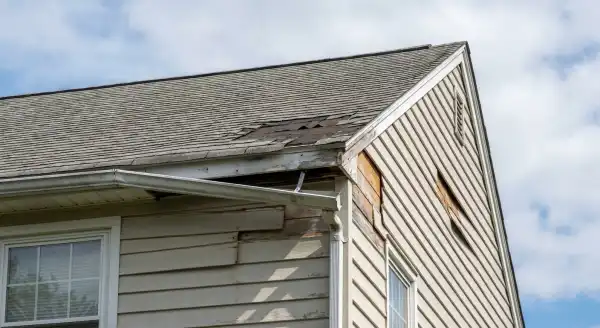
Wind damage to aging roof and siding materials generates widespread moderate damage during major storms. Post-war shingles on Cook Hill Road homes that are nearing end-of-life have reduced adhesive bond between tabs, allowing wind to lift and tear shingles at speeds well below the wind rating of the same product when new. First-generation vinyl siding that has become brittle from decades of UV exposure cracks and separates during wind events that newer siding would easily withstand. The result after a major storm is dozens of moderate damage claims from the Cook Hill corridor where identical materials on identical homes fail simultaneously.
Hail damage is episodic but significant when it occurs — Wallingford's position in the valley makes it vulnerable to hail from summer thunderstorms crossing the ridgeline, and the 2023 storm events left impact damage on hundreds of roofs throughout the post-war neighborhoods. Quinnipiac River flooding during extreme rain events adds a second damage category for valley-floor properties, creating compound scenarios where wind-damaged roofs and flood-damaged basements require different restoration approaches simultaneously. Power outage secondary damage during winter storms includes frozen pipes when heating systems fail and sump pump failure when basement water rises without electricity — both of which add damage categories to an already complex storm event.
Storm Damage Restoration Regulations in Wallingford, CT
Emergency protective measures — tarping damaged roofs, boarding broken windows, removing trees from structures — are exempt from Wallingford's building permit requirements and can proceed immediately after the storm passes. Permanent reconstruction and repair, however, require standard building permits through the Building Department, and the scope of permanent repair must comply with current Connecticut Building Code.
FEMA flood zone properties along the Quinnipiac River face additional regulatory requirements if storm-related flooding causes damage exceeding 50 percent of the structure's assessed value — the substantial damage determination may require elevation, flood-proofing, or other modifications to meet current flood protection standards before repair can proceed. Insurance documentation is critical for storm damage claims: we photograph all damage before any emergency protective work begins, document the emergency measures taken and their associated costs, and provide detailed scope-of-work estimates formatted to align with major insurance carrier requirements. Connecticut HIC registration is required for all storm restoration contractors performing both emergency and permanent repair work.
Storm Damage Restoration by Neighborhood in Wallingford
Established neighborhoods along Main Street and around Community Park face the highest tree-on-structure risk from mature hardwood canopy on lots where trees have been growing for 60 to 100 years. The Quinnipiac River corridor from Community Lake south through the Route 5 area is most vulnerable to flood damage during extreme rain events — homeowners in this zone should maintain flood insurance and understand that flood maps are periodically updated and may not reflect current risk.
Cook Hill's uniform post-war housing stock means individual storm events generate widespread identical damage — a single hail event can affect hundreds of properties with identical roof materials and identical exposure, creating a surge in contractor demand that extends repair timelines and the period during which secondary damage can accumulate. North Farms' elevated position on the western side of town provides less tree cover but more wind exposure from the west, making wind damage to siding and roofing more likely than tree damage. Yalesville's mixed housing produces varied damage patterns depending on building era, material condition, and individual property tree cover.
Why Wallingford Needs Professional Storm Damage Restoration
Storm damage costs in Wallingford multiply with every hour of delay between the event and protective response. A tarped roof opening costs a few hundred dollars and protects the interior for weeks until permanent repair can be scheduled. An untarped opening converts a roofing claim into a roofing-plus-water-damage claim with the next rainfall — and in the Quinnipiac valley, where weather systems follow each other up the coast, the next rain often arrives within 24 to 48 hours. This conversion from single-category to multi-category damage can double or triple the total restoration cost.
Wallingford homeowners who engage a restoration contractor within the first hours after a storm consistently see lower total costs, faster insurance resolution, and shorter displacement periods than those who wait. For Quinnipiac corridor properties with flood exposure, preparedness planning — including maintaining flood insurance, ensuring sump pump battery backup, and having a restoration contractor's emergency number readily available — is practical investment that costs little but prevents enormous loss when tested by the next major weather event.
What's Included in Our Wallingford Storm Damage Restoration Service
24/7 emergency tarping and board-up after storm
Hail and wind damage assessment with photo documentation
Complete roof, siding, gutter, and window replacement
Water intrusion mitigation and structural drying
Insurance claim filing support and adjuster meetings
Full rebuild to pre-storm condition with quality materials
Why Wallingford Homeowners Choose Restoration Control for Storm Damage Restoration
Licensed CT contractor — active state license verifiable online
IICRC-certified technicians with manufacturer-authorized installation training
Free on-site inspection and written estimate with no obligation in Wallingford
Full insurance claims support — documentation, Xactimate estimates, adjuster meetings
In-house crews only — no unlicensed subcontractors on your Wallingford project
Workmanship warranty backed by a company with 10+ years in Connecticut
24/7 emergency line for storm, water, and fire damage in Wallingford
BBB Accredited with A+ rating and 4.9-star average from 250+ reviews
What qualifies as storm damage for an insurance claim?
Wind damage, hail damage, lightning strike damage, fallen tree damage, and flooding from storm surge or excessive rainfall may all be covered depending on your policy. Most homeowner's policies cover sudden storm events. We help you document all damage and work with your adjuster to ensure a fair settlement.
How fast can you respond after a major storm?
We maintain emergency response crews available 24/7 for tarping and board-up. After a major weather event we deploy multiple teams simultaneously. We triage calls by severity and respond to the most vulnerable structures first, typically within hours.
Do you handle the insurance paperwork?
Yes. We prepare detailed damage estimates in Xactimate format, photograph all damage, attend adjuster meetings on your behalf, and communicate directly with your insurance company throughout the claims process. Our goal is to ensure you receive a fair settlement for all covered damage.
Request Storm Damage Restoration in Wallingford, CT
Call (833) 380-7378 or complete the form below. A licensed CT estimator will contact you within 1 business hour to schedule your free on-site inspection.