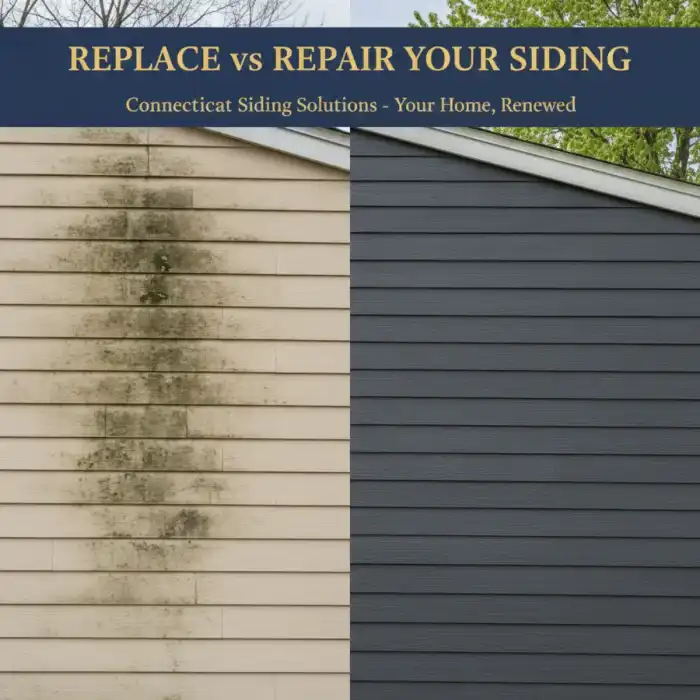
Your siding is more than a cosmetic feature. It is your home's primary weather barrier, and in Connecticut's climate, it takes a beating. From nor'easter winds gusting above 60 mph to summer hailstorms, winter ice accumulation, and year-round UV exposure, Connecticut siding endures conditions that many homeowners in milder climates never face. Knowing when to repair versus replace your siding can save you thousands of dollars and prevent costly structural damage caused by a compromised building envelope.
This guide covers the key factors Connecticut homeowners should evaluate when making the repair-or-replace decision.
Signs That Repair Is Sufficient
Not every siding problem requires a full replacement. In many cases, targeted repairs are the smarter financial decision. Repair is typically appropriate when:
- Damage is localized. A tree branch impact, a baseball from the neighbor's yard, or storm damage affecting a few panels can usually be repaired by replacing individual sections. If the damage covers less than 25 percent of one wall face, repair is almost always the right call.
- The siding is less than 15 years old. Vinyl siding installed in the last 15 years is typically still within its useful life and repairs are straightforward. Modern vinyl panels are designed to be individually replaceable, and matching colors is usually possible through the manufacturer.
- No moisture damage behind the siding. If the damaged siding is limited to the surface and the house wrap, sheathing, and framing underneath are dry and intact, a surface repair is appropriate.
- Fading is the primary concern. Vinyl siding fades over time, especially south and west-facing walls that receive the most UV exposure. If the siding is structurally sound but cosmetically faded, power washing and individual panel replacement in visible areas may be more cost-effective than full replacement.
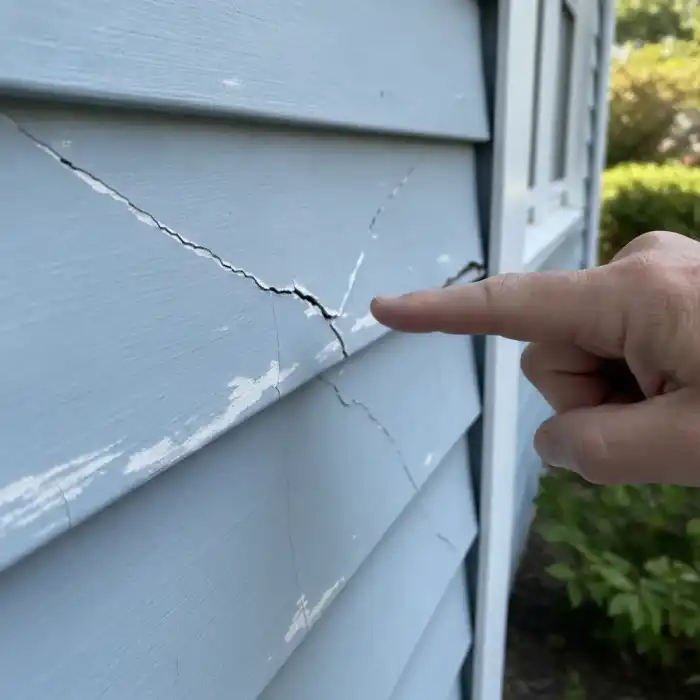
Cost context: Individual panel repairs in Connecticut typically cost $150 to $500 per section for vinyl and $300 to $800 for fiber cement. A spot repair is dramatically less expensive than a full replacement, which ranges from $8,000 to $15,000 for vinyl and $15,000 to $30,000 for fiber cement on an average Connecticut home of 1,800 to 2,200 square feet.
Signs That Full Replacement Is Necessary
Replacement becomes the right decision when repairs would be a temporary fix on a siding system that is fundamentally compromised. Here are the indicators:
Widespread warping, buckling, or loose panels. Vinyl siding expands and contracts with temperature changes. Connecticut's temperature range from negative 10 to 95 degrees Fahrenheit means siding moves significantly throughout the year. If panels are warped, buckled, or hanging loose in multiple locations, the siding has exceeded its ability to handle these thermal cycles and repairs will not restore performance.
Rot or moisture damage in multiple areas. Probe suspect areas with a screwdriver, particularly around window frames, corners, and the bottom row of siding near the foundation. If the screwdriver sinks in easily, you have rot. On wood siding like clapboard, which is common in older Connecticut homes in towns like Litchfield, Woodbury, and the shoreline communities, widespread rot means the siding has failed as a weather barrier and replacement is necessary.
Mold or mildew growth on the back side. If you pull back a siding panel and find mold on the house wrap or sheathing, moisture is getting behind the siding consistently. This usually indicates a systemic failure of the weather barrier, not an isolated issue that can be spot-repaired.
Energy bills are increasing. Siding contributes to your home's thermal envelope. If your heating bills have increased steadily and insulation checks out fine, deteriorated siding may be allowing significant air infiltration. Modern insulated vinyl siding can reduce energy loss through walls by up to 20 percent compared to non-insulated older siding.
The siding is more than 20-25 years old. Standard vinyl siding installed in the 1990s and early 2000s was thinner gauge than modern products and had less UV protection. If your siding is approaching or past the 25-year mark and showing multiple signs of wear, replacement with modern high-grade vinyl or fiber cement typically offers better value than ongoing repairs.
Connecticut-Specific Factors in the Decision
Several factors unique to Connecticut influence the repair-versus-replace calculation:
The Connecticut State Building Code requires that replacement siding must meet current energy code requirements. If you replace more than 25 percent of your siding, you may be required to add or upgrade insulation behind the new siding to meet the 2021 International Energy Conservation Code, which Connecticut has adopted. This adds cost to a replacement project but significantly improves energy efficiency.
Coastal wind zones. Homes in Connecticut's coastal towns from Greenwich through Groton are in higher wind speed design zones under the building code. If you are replacing siding in a coastal area, the new installation must meet wind resistance ratings appropriate for the zone, which may require specific fastening patterns and product certifications. Standard inland installation methods may not comply.
Historic district requirements. Many Connecticut towns have historic districts with specific exterior material requirements. Towns like Litchfield, Essex, Guilford, Madison, and sections of Hartford, New Haven, and Norwalk have historic district commissions that must approve exterior changes. If your home is in a historic district, vinyl siding may not be permitted, and you may need to use wood clapboard, fiber cement designed to mimic wood profiles, or other approved materials. Check with your local historic district commission before committing to a material.
Lead paint on older homes. Connecticut has a high percentage of pre-1978 housing stock, and many of these homes have lead paint under or on existing siding. Under the EPA's Renovation, Repair, and Painting Rule and Connecticut's Lead Poisoning Prevention Act, removing siding from pre-1978 homes requires lead-safe work practices performed by EPA-certified renovators. This adds cost to a replacement project but is not optional.
Material Options for Connecticut Homes
If you decide to replace, here are the most common materials and their suitability for Connecticut's climate:
- Vinyl siding remains the most popular choice in Connecticut due to its low maintenance, competitive cost, and 25 to 40-year lifespan. Look for panels with a minimum thickness of 0.044 inches and a wind resistance rating of at least 110 mph.
- Fiber cement (James Hardie) is increasingly popular in Connecticut's higher-end markets. It resists moisture, does not warp or rot, handles freeze-thaw cycles well, and carries a 30 to 50-year warranty. It costs 40 to 60 percent more than vinyl but offers superior durability and curb appeal.
- Engineered wood products like LP SmartSide offer the look of real wood with better moisture and insect resistance. Popular in Connecticut's suburban and rural markets where homeowners want a natural aesthetic without the maintenance of traditional wood.
- Cedar and wood clapboard remain common in Connecticut's historic homes and upscale communities. Beautiful and traditional, but requiring regular painting or staining every five to seven years and vigilant moisture management.
The 30-Percent Rule
Here is a practical guideline we use at Restoration Control: if more than 30 percent of your siding needs repair and the siding is over 15 years old, replacement almost always provides better long-term value. The combined cost of extensive repairs, plus the likelihood of needing additional repairs within the next few years, typically exceeds the cost of a one-time replacement with modern materials that will last 25 to 40 years.
Get a Professional Assessment
Restoration Control provides free siding inspections for Connecticut homeowners. Our certified inspectors evaluate your siding's condition, check for hidden moisture damage behind panels, and provide honest recommendations on repair versus replacement with detailed cost comparisons for each option. We install vinyl, fiber cement, and engineered wood siding and handle all permitting through your local building department. Call (833) 380-7378 to schedule your free siding assessment.