
The stain on the ceiling always shows up at the worst time — during the February thaw, or the morning after a nor'easter has spent twelve hours driving rain against the roof. And the first question every Connecticut homeowner asks is the same: will insurance pay for this? The honest answer is that it depends almost entirely on what caused the leak, not on how bad the damage looks.
Restoration Control has worked hundreds of roof leak claims across Connecticut, and the pattern is consistent: homeowners who understand how their policy actually works recover far more than those who file blind. This guide explains the rules the adjuster will apply before they ever climb the ladder.
The Rule That Decides Everything: Sudden vs. Gradual
Most Connecticut homes carry an HO-3 policy, which covers the structure on an open-peril basis — everything is covered except what the policy specifically excludes. The exclusion that decides roof leak claims is wear and tear. Insurance is designed to pay for sudden, accidental damage, not for a roof reaching the end of its natural life.
In practice, that splits Connecticut roof leaks into two piles:
- Usually covered: wind tearing shingles off during a storm, a tree limb puncturing the deck, damage from the weight of snow and ice, and interior water damage caused by an ice dam backing meltwater under the shingles
- Usually denied: a 25-year-old roof that has simply worn out, leaks around flashing that deteriorated over years, damage from moss or neglected maintenance, and any leak the adjuster can show was developing slowly over months
The frustrating middle ground is that both can be true at once — an aging roof and a storm. Which story the file tells depends heavily on the documentation, which is why what you do in the first days matters so much.
The Ice Dam Exception Every Connecticut Homeowner Should Know
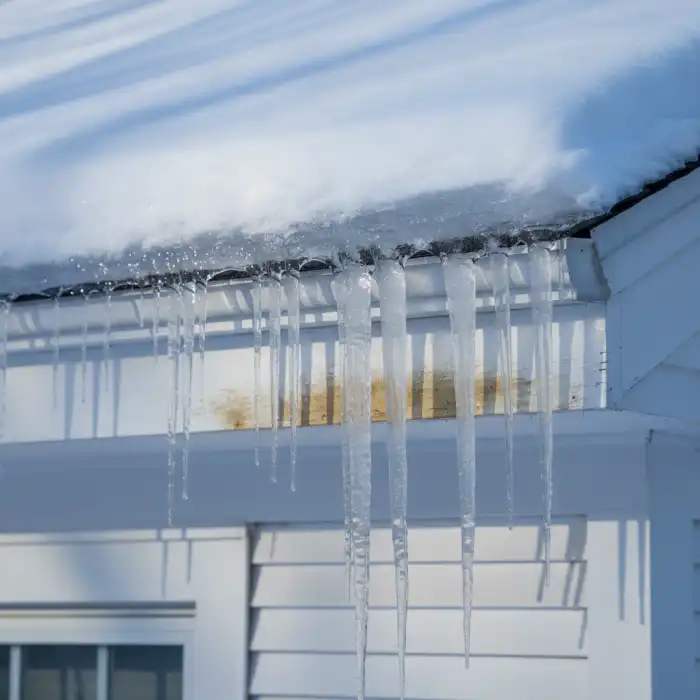
Ice dams are Connecticut's signature winter roof problem: snow melts against a warm attic, refreezes at the cold eave, and the growing ridge of ice forces meltwater backward under the shingles and into walls and ceilings. Here's the part most homeowners don't know — the resulting water damage is generally covered, because water forcing its way into the house is sudden and accidental, even though the underlying cause is insulation, not the roof.
Covered and not covered can live on the same claim: insurers routinely pay for the ruined ceiling, walls, and flooring an ice dam causes while declining to pay for roof or insulation upgrades — the damage is a covered loss, the prevention is maintenance.
What Connecticut Policies Add: Wind and Hurricane Deductibles
If you live along the shoreline — anywhere from Greenwich to Stonington — check your declarations page for a hurricane or windstorm deductible. Instead of your normal flat deductible, these run 1% to 5% of your dwelling coverage. On a home insured for $400,000, a 2% hurricane deductible means the first $8,000 of storm damage is yours before the policy pays a dollar. These deductibles trigger under conditions defined in the policy — typically a named storm — and they surprise coastal homeowners on exactly the claims where the damage is largest.
Also worth knowing: many carriers now apply roof payment schedules to older roofs, paying actual cash value (depreciated value) rather than full replacement cost once a roof passes 15 or 20 years. If your renewal paperwork mentioned a "roof surfaces schedule," your recovery on an older roof may be a fraction of the replacement price.
What to Do the Day You Find the Leak

Your policy imposes a duty to mitigate — you're required to take reasonable steps to prevent the damage from getting worse, and the insurer pays reasonable costs of doing so. That shapes the correct sequence:
- Document first. Photograph the ceiling, the attic, the roof from the ground, and anything wet — with timestamps — before anything is moved or repaired
- Stop the spread. Contain water, move contents, and get emergency tarping on the roof; keep every receipt, because mitigation costs belong on the claim
- Don't make permanent repairs yet. The adjuster needs to see the damage; replacing shingles before inspection can sink the claim
- Get your own damage assessment. A roofing contractor's written report — wind-lifted shingles, creased tabs, impact marks, the date of the causing storm — gives the file evidence that competes with the insurer's inspection
- File promptly. Policies require timely notice, and weather data is easiest to match to damage while the storm is recent
If the Claim Is Denied
Denials on roof claims usually cite wear and tear or pre-existing damage. A denial is a position, not a verdict. Connecticut's Unfair Insurance Practices Act (CGS § 38a-816) requires carriers to conduct reasonable investigations and deal with claims in good faith, and you have real options: request a re-inspection with your contractor present, submit storm date evidence and a written rebuttal, or escalate with a complaint to the Connecticut Insurance Department, which mediates consumer disputes at no cost.
The pattern Restoration Control sees most often: claims denied on a drive-by or photos-only inspection get reversed when a contractor walks the adjuster across the actual roof, shingle by shingle.
When to Call a Professional
A roof leak claim is really two problems — a construction problem and a paperwork problem — and they have to be solved together. Repairing the roof without documenting the cause forfeits the claim; documenting the claim while water keeps coming in grows the loss.
Restoration Control handles both sides across Connecticut: 24/7 emergency tarping, full roof repair and interior restoration, and direct work with your insurance company from first inspection to final payment — see our insurance claims guide for the full process. Call (833) 380-7378 and get the documentation started before the next storm complicates the story.