
Connecticut sits directly in the nor'easter corridor, and the state averages three to five significant nor'easters per season from October through April. These storms pack sustained winds of 40 to 60 mph, dump 12 to 24 inches of snow, and push storm surge along the Long Island Sound coast from Greenwich to Mystic. The Blizzard of 2013 dropped 40 inches on Hamden. Storm Alfred in October 2011 snapped trees statewide and left 800,000 customers without power for up to 11 days. These are not distant memories; they are reminders of what every Connecticut homeowner should prepare for each fall.
The good news is that most nor'easter damage is preventable. Here is a practical, room-by-room checklist to protect your home before the season hits.
Roof and Attic: Your First Line of Defense
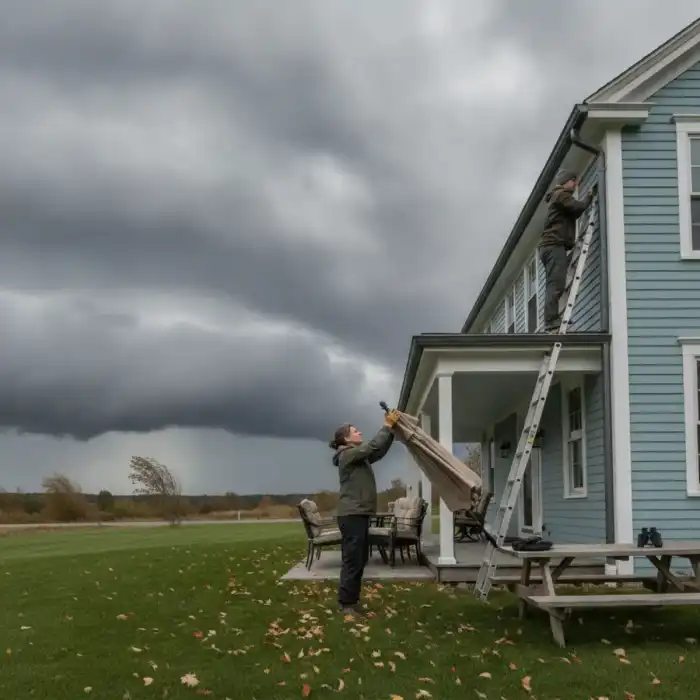
Your roof takes the brunt of every nor'easter. High winds lift shingles, heavy snow creates structural load, and ice dams form when heat escapes through a poorly insulated attic. Start your preparation here:
- Inspect shingles for damage. Walk your property and look for curling, cracking, or missing shingles. Binoculars work for steep roofs. Any shingle damage should be repaired before the first storm. In Connecticut, wind-driven rain can penetrate even small gaps.
- Check flashing around chimneys, vents, and skylights. Flashing failures are the number one source of roof leaks during storms. Look for rust, gaps, or lifting at every roof penetration point.
- Clean gutters and downspouts thoroughly. Connecticut's fall foliage is beautiful, but it clogs gutters fast. Clogged gutters cause ice dams, which force water under shingles and into your attic and walls. Clean gutters after the last leaves drop, usually mid-November.
- Add attic insulation if needed. The Connecticut State Building Code requires a minimum of R-49 attic insulation for new construction, but many older homes in Hartford, New Haven, and Waterbury have R-19 or less. Proper insulation prevents ice dams by keeping the roof surface cold.
- Ensure soffit and ridge vents are clear. Adequate attic ventilation maintains a cold roof deck, which prevents snow from melting unevenly and forming ice dams. The building code requires one square foot of net free vent area per 150 square feet of attic floor.
Siding and Exterior Walls
Nor'easter winds commonly reach 50 mph in Connecticut, with gusts exceeding 70 mph along the coast. Your siding is your building envelope's primary weather barrier.
- Walk the perimeter and look for loose, cracked, or missing siding panels. Vinyl siding can unlatch from its locking strip without being visibly obvious from a distance.
- Inspect caulking around windows and doors. Dried, cracked, or missing caulk allows wind-driven rain to penetrate walls. Re-caulk with a high-quality exterior silicone rated for below-zero temperatures.
- Trim tree branches that hang within 10 feet of your roof or siding. During nor'easters, branches become projectiles. Connecticut's abundance of hardwoods, especially oaks and maples, means heavy limbs can cause significant structural damage.
- Secure or store outdoor furniture, grills, and decorations. Anything that can become airborne in 60 mph winds should be moved to a garage or tied down securely.
Windows and Doors
Wind-driven rain during a nor'easter pushes water horizontally against your home. Standard weatherstripping and window seals must be in good condition to prevent interior water damage.
- Test weather stripping on all exterior doors. Close the door on a dollar bill; if it slides out easily, the seal is worn and should be replaced.
- Check window locks and ensure all windows close tightly. Older double-hung windows common in Connecticut homes from the 1940s through 1970s often have gaps that allow significant air and water infiltration.
- Consider storm windows if you have single-pane windows. Storm windows reduce heat loss by up to 50 percent and provide an additional barrier against wind-driven rain and debris.
Basement and Foundation
Nor'easters frequently drop two to four inches of rain over 24 to 48 hours. Combined with saturated ground, snowmelt, and Connecticut's rocky, clay-heavy soil that drains poorly, basement flooding is a real risk.
- Test your sump pump. Pour a bucket of water into the sump pit and verify the pump activates, runs properly, and shuts off. Replace the battery backup if it is more than three years old.
- Check foundation walls for new cracks. Horizontal cracks are more concerning than vertical ones and may indicate hydrostatic pressure from water-saturated soil.
- Ensure grading slopes away from your foundation. The ground should drop at least six inches over the first ten feet away from your home in all directions.
- Clear window wells of debris and ensure covers are in place.
Utilities and Emergency Preparedness

Extended power outages are common during major nor'easters. Eversource and United Illuminating have improved response times since the devastating storms of 2011 and 2012, but outages lasting 48 to 72 hours are still routine in heavily wooded areas of Litchfield County, Tolland County, and rural parts of Hartford County.
- Have a generator plan. If you own a portable generator, test it now and stock fresh fuel. Never run a generator indoors or in an attached garage. Carbon monoxide kills, and Connecticut sees generator-related CO poisonings after every major storm.
- Insulate exposed pipes. Focus on pipes in unheated spaces like garages, crawl spaces, and exterior walls. Pipe insulation sleeves cost a few dollars per foot and can prevent thousands in water damage from burst pipes.
- Know your shutoff valves. Every household member should know how to shut off water, gas, and electricity. Label your breaker panel clearly.
- Prepare a 72-hour emergency kit with water, non-perishable food, flashlights, batteries, a battery-powered radio, medications, and important documents in a waterproof container.
After the Storm: What to Do First
Once the nor'easter passes, do a careful exterior inspection before assuming everything is fine. Look for missing shingles, fallen branches on the roof, damaged siding, and any water intrusion in the attic or basement. Document any damage with photos immediately, even before cleanup, for insurance purposes.
If you discover storm damage, do not wait to address it. In Connecticut's winter climate, exposed roof decking or damaged siding allows moisture to enter your home continuously, creating conditions for mold growth and structural deterioration within days.
Get Your Home Storm-Ready
Restoration Control helps Connecticut homeowners prepare for and recover from nor'easters. Whether you need a pre-season roof inspection, emergency tarping after a storm, or full restoration of wind and water damage, our team is available 24/7. We work with all major insurance carriers in Connecticut and handle the claims documentation for you. Call (833) 380-7378 to schedule a free pre-season inspection or request emergency storm damage assistance.