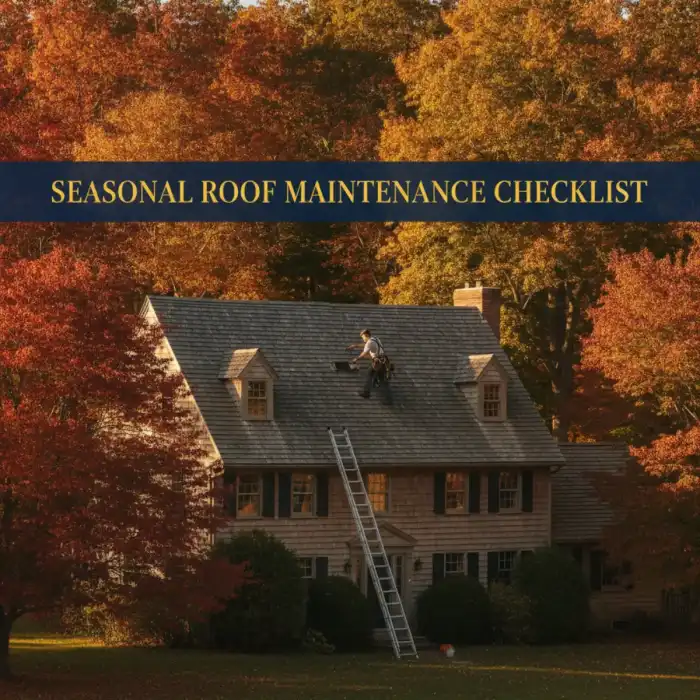
A well-maintained roof in Connecticut should last 25 to 30 years for architectural shingles and 50 years or more for metal roofing. But Connecticut's punishing four-season climate, with temperature swings from negative 10 degrees in January to 95 degrees in July, plus nor'easters, ice storms, and summer thunderstorms, can cut that lifespan dramatically if maintenance is neglected. The National Roofing Contractors Association estimates that regular maintenance can extend a roof's lifespan by 25 percent and prevent 95 percent of premature roof failures.
This season-by-season checklist gives Connecticut homeowners a practical, actionable maintenance plan to protect their most important structural asset.
Spring Checklist (March - May)
Spring is assessment season. Winter has done its worst, and now is the time to identify and address any damage before warm-weather rains expose vulnerabilities.
- Inspect shingles from the ground with binoculars. Look for cracked, curling, buckling, or missing shingles. Connecticut's freeze-thaw cycles, where temperatures cross the 32-degree threshold roughly 80 to 100 times per winter, cause shingle granules to loosen and adhesive strips to fail.
- Check for ice dam damage. Ice dams are one of Connecticut's most common roof problems. Look for water stains on interior ceilings and walls near exterior walls, which indicate water backed up under shingles during winter. Check the soffit and fascia for peeling paint, rot, or staining.
- Examine flashing around chimneys, skylights, plumbing vents, and where the roof meets walls. Winter expansion and contraction can break flashing seals. Re-seal with roofing cement or have damaged flashing replaced.
- Clear debris from roof valleys. Leaf accumulation in valleys traps moisture and accelerates shingle deterioration. Use a soft broom or leaf blower from a ladder; never use a pressure washer on shingles.
- Check the attic for signs of water intrusion, daylight showing through the roof deck, or compressed or wet insulation. Spring is the best time to catch problems that developed over winter.
- Schedule professional repairs for any damage found. Spring is the ideal season for roof work in Connecticut because temperatures are moderate and contractor schedules have not yet filled up with summer projects.
Summer Checklist (June - August)
Summer in Connecticut brings heat, humidity, UV exposure, and severe thunderstorms. Your summer focus should be on ventilation, storm readiness, and UV damage assessment.
- Verify attic ventilation is working. On a hot summer day, your attic temperature should be within 10 to 15 degrees of the outside temperature. If your attic is 140 degrees when it is 90 outside, ventilation is inadequate. Poor ventilation cooks shingles from underneath, bakes the adhesive, and can cut shingle lifespan by 20 percent. The Connecticut Building Code requires a minimum of 1 square foot of net free vent area per 150 square feet of attic floor space.
- Inspect after every severe thunderstorm. Connecticut averages 20 to 30 thunderstorm days per year, and summer storms can produce hail and winds exceeding 60 mph. After each significant storm, walk your property and check for downed branches on the roof, dislodged shingles, and damaged gutters.
- Check for algae or moss growth. Black streaking on north-facing roof slopes is Gloeocapsa magma, an algae that feeds on limestone filler in shingles. While primarily cosmetic, extensive algae growth retains moisture and can accelerate shingle granule loss. Moss is more damaging because its root structures physically lift shingle edges.
- Trim overhanging branches. Maintain a minimum 10-foot clearance between tree branches and your roof. Overhanging branches drop debris, shade the roof promoting moss growth, and become projectiles in summer storms.
- Inspect caulk and sealants. Summer heat causes expansion that can crack aged caulk around roof penetrations, vents, and flashing. Replace any cracked or missing sealant.
Fall Checklist (September - November)
Fall preparation is your last chance to address issues before Connecticut's harsh winter. This is the most critical maintenance window of the year.
- Clean gutters thoroughly after the last leaves drop, typically mid to late November in most of Connecticut. Clogged gutters cause ice dams, the number one source of winter roof damage in the state. Consider gutter guards if you have heavy tree coverage.
- Inspect and replace damaged shingles. Any compromised shingles should be repaired before the first freeze. Shingle adhesive requires temperatures above 40 degrees to bond properly, so timing is critical. Most contractors in Connecticut stop doing shingle work by mid-December.
- Check attic insulation levels. Adequate attic insulation (R-49 per Connecticut code for new construction) prevents heat from escaping through the roof deck, which is the primary cause of ice dams. If your insulation is compressed, displaced, or below R-38, add more before winter.
- Seal any air leaks from the living space into the attic. Recessed lights, plumbing penetrations, attic hatches, and ductwork joints are common leak points. Warm air rising into the attic melts snow on the roof unevenly, creating ice dams at the eaves.
- Inspect and clear downspout extensions. Ensure downspouts discharge at least four to six feet from the foundation. Proper drainage prevents basement flooding and foundation damage during fall rain events and spring snowmelt.
Winter Checklist (December - February)
Winter roof maintenance in Connecticut is primarily about monitoring and preventing ice damage. Avoid going on the roof when it is icy or snow-covered.
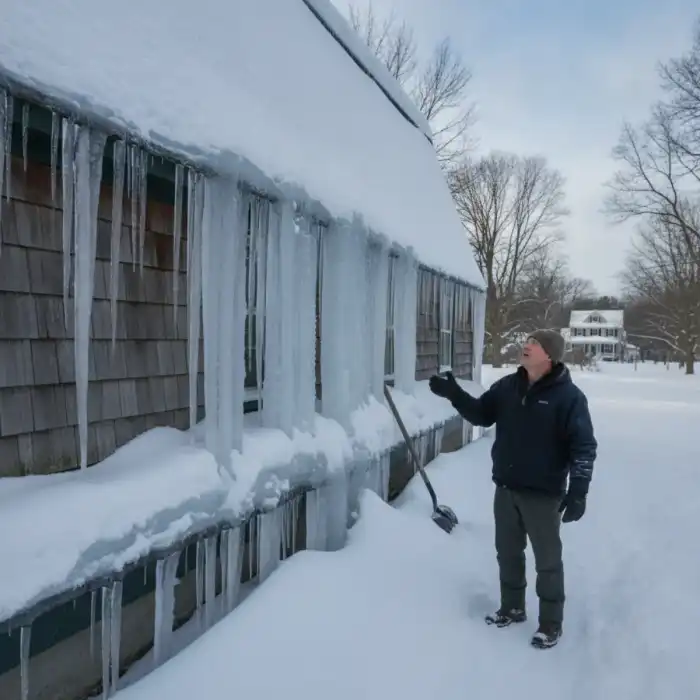
- Monitor for ice dams after heavy snowfall. Icicles hanging from gutters are a warning sign but not the actual problem. The ice dam forms on the roof surface above the gutter, creating a barrier that traps meltwater. Look for water stains appearing on interior ceilings near exterior walls.
- Use a roof rake after heavy snowfall. Remove snow from the lowest three to four feet of the roof using a telescoping roof rake from the ground. This eliminates the snow closest to the eave where ice dams form. Never use a roof rake on the upper portions of the roof, as this can damage shingles.
- Do not chip ice. Never use a hammer, chisel, ice pick, or salt to remove ice dams from your roof. These methods damage shingles, gutters, and flashing. If an ice dam is causing active water intrusion, call a professional who uses low-pressure steam to remove ice safely.
- Check attic after every significant snow event. Look for new water stains, frost on the underside of the roof deck (which indicates warm moist air leaking from the living space), and any signs of moisture on insulation.
- Watch for sagging. If your roof deck shows visible sagging under heavy snow load, it may indicate a structural problem. The Connecticut Building Code requires roofs to support a minimum of 30 pounds per square foot of snow load, but older homes may not meet current standards. One foot of packed snow weighs roughly 20 pounds per square foot.
Schedule Your Seasonal Roof Inspection
Restoration Control provides free seasonal roof inspections for Connecticut homeowners. Our roofing specialists identify issues early, preventing minor maintenance items from becoming major repair bills. Whether you need a post-winter assessment, storm damage repair, or a complete roof replacement, we handle it all. We are licensed, insured, and experienced with every roofing material common in Connecticut. Call (833) 380-7378 to schedule your free inspection today.