After a major storm hits Connecticut, the last thing you want is a fight with your insurance company. Yet insurance claim disputes are one of the most common sources of stress for Connecticut homeowners recovering from storm damage. Between nor'easters, tropical storm remnants, summer thunderstorms, and winter ice events, Connecticut sees billions of dollars in insured storm losses each decade. Understanding how the claims process works, and knowing your rights under Connecticut law, puts you in a far stronger position to get the full compensation you deserve.
This guide covers everything Connecticut homeowners need to know about filing, documenting, and maximizing a storm damage insurance claim.
Step 1: Document the Damage Immediately
Documentation is the foundation of a successful insurance claim. The moment it is safe to assess your property after a storm, begin collecting evidence. Do not clean up, make repairs, or throw anything away until you have thorough documentation.
Here is what your documentation should include:
- Photographs of all damage from multiple angles, including wide shots showing context and close-ups showing detail. Capture damage to the roof, siding, gutters, windows, interior ceilings and walls, landscaping, and any personal property.
- Video walkthroughs of each affected area, narrating what you see and where. Video captures scope in a way that still photos cannot.
- Date and time stamps on all photos and video. Most smartphones do this automatically, but verify the setting is enabled.
- Written notes describing the storm event, when it occurred, when you discovered the damage, and what emergency measures you have taken.
- Save weather reports and any severe weather alerts for your area. These establish that a covered weather event occurred. The National Weather Service Hartford office archives are a good resource.
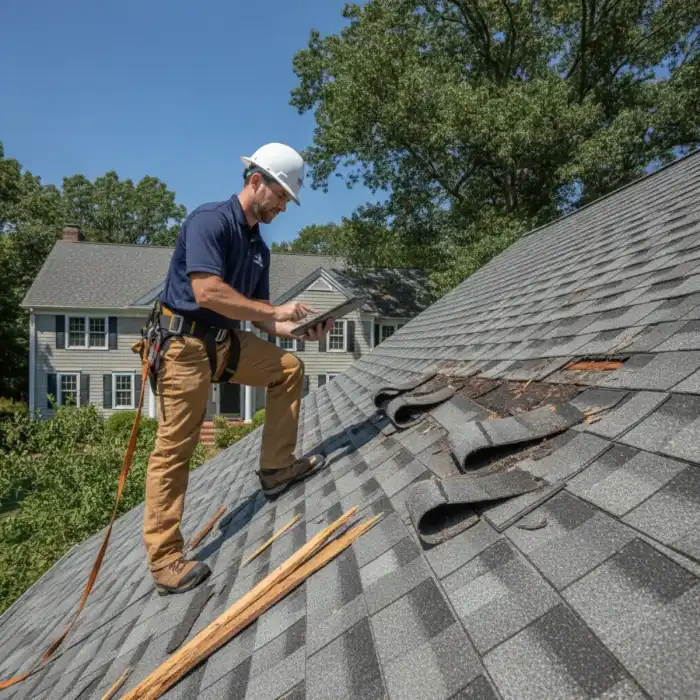
If your roof was damaged, do not climb onto it. Use binoculars or a drone if available. Roof damage documentation from ground level is sufficient for filing the initial claim, and your insurer will send an adjuster for the roof inspection.
Step 2: Take Emergency Protective Measures
Connecticut insurance policies require you to take reasonable steps to prevent further damage after a storm. This is called the duty to mitigate, and failing to do so can result in your insurer denying coverage for secondary damage.
Reasonable protective measures include:
- Tarping a damaged roof to prevent rain from entering
- Boarding up broken windows
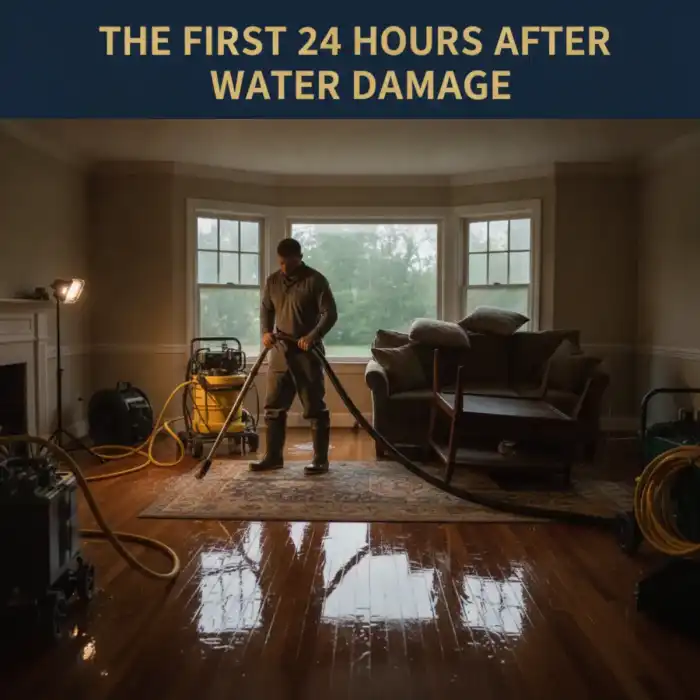
- Removing standing water from inside the home
- Moving undamaged belongings away from areas of active water intrusion
- Turning off water to prevent further damage from broken pipes
Keep every receipt for emergency materials and services. Emergency mitigation costs are covered under your policy in addition to the damage repair costs. This includes tarps, plywood, wet-dry vacuum rental, hotel stays if the home is uninhabitable, and emergency contractor fees.
Step 3: File Your Claim Promptly
Contact your insurance company as soon as possible after documenting the damage. Under Connecticut General Statutes Section 38a-816, insurers are required to acknowledge receipt of your claim within 15 business days. In practice, most insurers acknowledge claims within 24 to 48 hours during non-catastrophic events, though response times lengthen significantly after major storms that affect thousands of homes simultaneously.
When filing your claim:
- Report by phone for the fastest initial response, then follow up in writing via email for a paper trail
- Request your claim number and the name and direct contact information for your assigned adjuster
- Ask about your policy's specific deductible for wind and storm damage. Many Connecticut policies have a separate wind/hail deductible, often one to two percent of the dwelling coverage amount, which is higher than your standard deductible
- Ask if your policy includes Additional Living Expenses (ALE) coverage if your home is uninhabitable
Step 4: Understand Your Connecticut-Specific Rights
Connecticut has some of the strongest consumer protection laws in the country when it comes to insurance claims. Here are the key protections every homeowner should know:
The Connecticut Unfair Insurance Practices Act (CGS Section 38a-816) prohibits insurers from misrepresenting policy provisions, failing to acknowledge claims promptly, failing to adopt reasonable standards for investigating claims, and refusing to pay claims without conducting a reasonable investigation. If your insurer violates any of these provisions, you can file a complaint with the Connecticut Insurance Department.
The right to choose your own contractor. Your insurance company may recommend or prefer certain contractors, but under Connecticut law, you have the absolute right to choose any licensed contractor for your repairs. Insurers cannot require you to use their preferred vendors, and they cannot reduce your claim payout because you chose a different contractor.
Replacement cost vs. actual cash value. Most Connecticut homeowner policies provide replacement cost coverage, which means the insurer must pay the full cost to repair or replace damaged components with like kind and quality, without deduction for depreciation. However, many policies pay actual cash value (depreciated amount) upfront and the remaining replacement cost after repairs are completed. Understand which type of policy you have before settling.
Step 5: The Adjuster Visit
Your insurance company will send an adjuster to inspect the damage. This is a critical step, and you should be prepared. Here are essential tips for the adjuster visit:
- Be present for the inspection. Walk the property with the adjuster and point out all damage you have documented. Adjusters may miss damage that is not immediately obvious, especially on roofs and in attics.
- Have your documentation ready to share, including photos, video, and written notes.
- Point out all affected areas, including interior damage like water stains on ceilings, which indicate roof breaches that may not be visible from outside.
- Ask questions. The adjuster should explain their assessment process, what they are documenting, and the timeline for receiving your estimate.
- Consider having your contractor present. A professional restoration contractor can identify damage that adjusters sometimes miss and can speak the same technical language regarding repair methods and costs.
Step 6: Review the Estimate Carefully
After the inspection, your insurer will provide a written estimate. Review it carefully against your own documentation. Common items that are underestimated or omitted include:
- Damage to areas the adjuster could not access, such as the backside of roof planes not visible from the ground
- Interior damage from water intrusion, which may not manifest until days after the storm
- Code upgrade costs required by the Connecticut State Building Code when replacing damaged components. For example, if a storm destroys a portion of your roof and the current code requires improved underlayment or ventilation, those upgrade costs should be covered under most policies' ordinance or law coverage
- Matching costs for siding, roofing, or gutters where damaged sections cannot be patched without replacing adjacent undamaged sections to maintain a uniform appearance
If the estimate seems low, you have the right to dispute it. Provide your contractor's estimate as a supplement, along with detailed documentation of why the insurer's scope of work is insufficient.
Step 7: When to Escalate
If your claim is denied or you believe the settlement offer is unfairly low, you have several options in Connecticut:
- Request a re-inspection with a different or senior adjuster
- File a complaint with the Connecticut Insurance Department at (800) 203-3447 or through their online portal
- Invoke your policy's appraisal clause, which allows both parties to hire independent appraisers who then select an umpire to determine the fair claim amount
- Consult a public adjuster, who is a licensed professional who represents your interests rather than the insurance company's. In Connecticut, public adjusters are licensed by the Insurance Department and typically charge 10 to 15 percent of the claim settlement
Let Restoration Control Handle the Process
Restoration Control works directly with all major insurance carriers in Connecticut, including The Hartford, Travelers, Aetna, State Farm, Allstate, and Liberty Mutual. We document damage using Xactimate, the same estimating platform your insurer uses, which eliminates disputes over pricing. Our team handles the supplement process when additional damage is discovered and communicates directly with your adjuster to keep your claim moving. Call (833) 380-7378 for a free storm damage assessment and insurance claim assistance.