
On the evening of July 4, 2026, a line of severe thunderstorms tore across Connecticut in under three hours. The National Weather Service logged more than thirty damage reports across the state: wind gusts measured at 64 mph off Rowayton and 65 mph at the Coast Guard Academy in New London, trees and wires down from Litchfield County to Stonington, power lines burning in Bristol, trees across I-84 in Southington, docks flipped over on Candlewood Lake, and a tree that crashed into Torrington's North End firehouse. In Groton, spotters described big, healthy oaks all felled in the same direction — the signature of a downburst.
If your property took damage that night — or in any storm — what you do next determines what your insurance actually pays. Restoration Control has walked hundreds of Connecticut storm claims from first tarp to final check. Here is the exact sequence.
First, the Good News About Your Deductible
Connecticut homeowners near the coast often carry a separate hurricane or windstorm deductible of 1% to 5% of dwelling coverage — but those deductibles trigger only under conditions defined in the policy, typically a named tropical storm. The July 4th event was a severe thunderstorm complex, not a named storm, which means for most policies only your standard flat deductible applies. On a claim with $30,000 in roof and interior damage, that difference alone can be worth thousands.
Step 1: Make It Safe, Then Stop the Bleeding
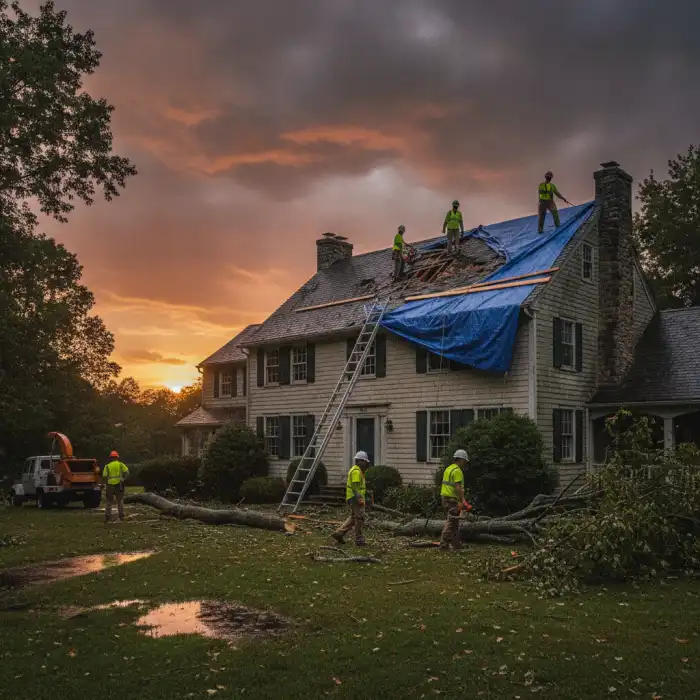
Downed lines get reported to 911 and your utility — nothing else happens until the property is safe. After that, your policy's duty to mitigate takes over: you are required to take reasonable steps to keep the damage from getting worse, and your insurer must reimburse reasonable costs of doing it.
- Get emergency tarping over any roof opening before the next rain — an open roof deck turns a wind claim into a wind-plus-water claim, and delays give adjusters arguments
- Board up broken windows and doors
- Move undamaged contents away from exposed areas
- Keep every receipt — tarps, plywood, labor, even the mileage. Mitigation costs belong on the claim
Step 2: Document Like an Adjuster

Photograph everything before anything is moved or repaired: the roof from the ground, every interior stain, the tree on the fence, the debris field, the neighbor's damage in the background. Timestamps matter. Then take the step most homeowners never learn:
Pull the public weather record. The National Weather Service publishes storm reports for every event — date, time, town, measured wind speeds. For July 4th, that record shows exactly which Connecticut towns took damage and when. Attaching the NWS report for your town and date anchors your claim to a documented storm, which is precisely the evidence that defeats a "wear and tear" denial.
Restoration Control includes the matching weather documentation in every storm damage assessment we write — it is the cheapest, most persuasive page in the file.
Step 3: File Promptly and Say It Plainly
Policies require timely notice, and claims filed while the storm is fresh are easier to match to the weather record. When you call, state the facts without diagnosis: "wind damage to the roof and a tree strike on the night of July 4th." Let the inspection establish scope. Note your claim number, the adjuster's name, and every conversation — a simple dated log becomes valuable if the claim gets contested.
Step 4: Don't Meet the Adjuster Alone
The insurance adjuster inspects on behalf of the carrier. You are entitled to have your own storm damage contractor present, and it changes outcomes: the contractor walks the same roof, points out the creased shingles and lifted flashing a ground-level look misses, and submits a written scope with measurements and photos that competes line-by-line with the carrier's estimate. Disagreements get resolved on specifics, not impressions.
What the July 4th Storm Teaches About Trees
Tree claims follow rules most homeowners learn the hard way:
- Tree hits your house, garage, or fence: the structure damage and the tree removal are generally covered
- Tree falls in the yard and hits nothing: removal coverage is limited — commonly $500 to $1,000 per tree — and some policies pay nothing without structural damage
- Your neighbor's tree lands on your house: your policy pays first; whether their insurer contributes depends on proving the tree was visibly dead or neglected
- Power was out for days: many Connecticut policies include food spoilage coverage, often $250 to $500 — small, but it's yours; claim it
If the Offer Is Low — or the Answer Is No
Underpaid claims get corrected through supplements: documented requests for the items the first estimate missed, which are routine in storm claims. Denied claims are positions, not verdicts. Connecticut's Unfair Insurance Practices Act (CGS § 38a-816) requires carriers to investigate fairly and settle in good faith; a re-inspection with your contractor present, a written rebuttal with the weather record attached, or a complaint to the Connecticut Insurance Department — which mediates disputes at no cost — all remain on the table. Our insurance claims guide covers the escalation path in detail.
When to Call a Professional
A storm claim is won in the first week: the tarp that stops secondary damage, the photos taken before cleanup, the weather record pulled while the date still means something. After the July 4th storms, crews across towns like Torrington and Bristol were booked within hours — the homeowners who called first got protected first.
Restoration Control responds 24/7 across Connecticut with emergency tarping, board-up, full storm restoration, and direct insurance coordination from first inspection to final payment. Call (833) 380-7378 — and if the storm has already passed, call before the next one writes the ending to your claim.