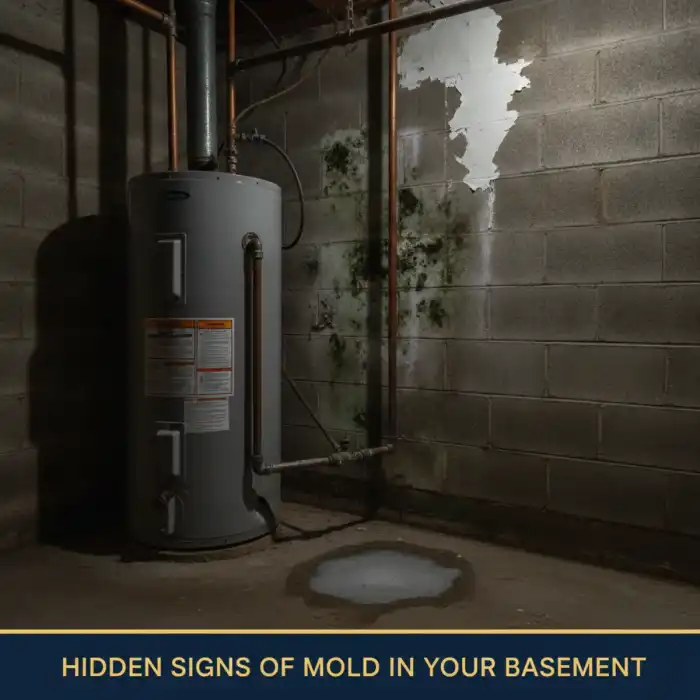
Connecticut basements are practically engineered for mold growth. The combination of high water tables, clay-heavy soil that traps moisture against foundations, seasonal flooding from snowmelt and heavy rains, and summer humidity that routinely exceeds 70 percent creates ideal conditions for mold to thrive unseen for months or even years. The Connecticut Department of Public Health estimates that over 50 percent of homes in the state have some level of mold in their basements, and most homeowners have no idea it is there.
The obvious signs of mold, such as visible black patches and a strong musty smell, are easy to recognize. But by the time mold is that obvious, the problem is usually extensive. Here are the subtle, hidden signs that mold is growing in your Connecticut basement before it becomes a major issue.
1. A Faint Earthy or Musty Smell That Comes and Goes
The most common hidden sign of basement mold is an intermittent musty odor. Unlike the strong, unmistakable smell of a major mold infestation, early-stage mold produces a faint earthy scent that many homeowners dismiss as just how basements smell. It is not. A healthy, dry basement should smell neutral.
This smell is produced by microbial volatile organic compounds (MVOCs), which are gases released by actively growing mold. The intermittent nature of the odor is key. You may notice it on humid days in July and August but not during the drier months. This is because mold goes semi-dormant in low-humidity conditions and reactivates when moisture returns, releasing MVOCs as it resumes growth.
If your basement smells musty only during certain seasons or weather conditions, mold is almost certainly present somewhere, even if you cannot see it.
2. White or Grayish Powder on Concrete Walls
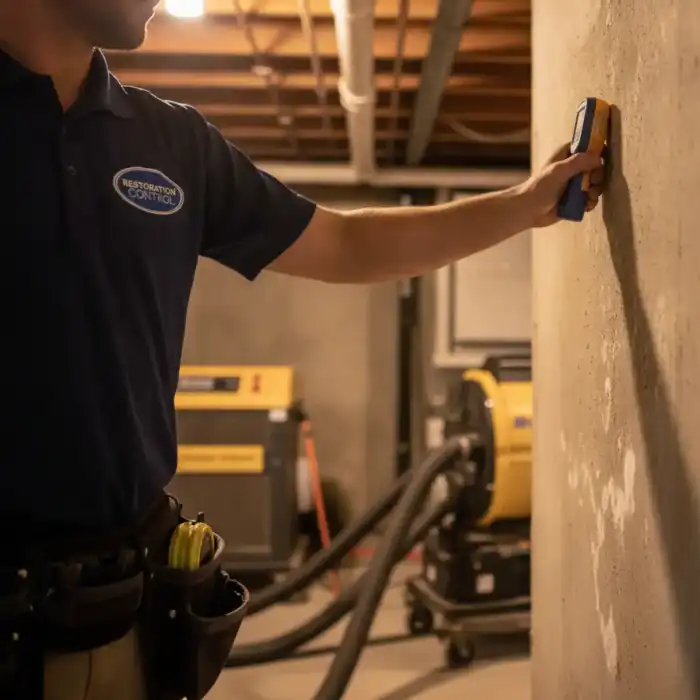
Many Connecticut homeowners mistake this for efflorescence, which is a harmless mineral deposit left when water evaporates from concrete. Efflorescence is crystalline and dissolves easily in water. Mold, on the other hand, is fuzzy or powdery and does not dissolve when you wipe it with a wet cloth.
Here is a simple test: spray the white substance with water. If it dissolves and disappears, it is efflorescence. If it stays fuzzy or smears, it is mold. Both indicate a moisture problem, but mold requires professional attention.
In Connecticut's older housing stock, particularly in towns like New Haven, Hartford, Waterbury, and Bridgeport, many basements have stone or block foundations without modern waterproofing membranes. These foundations wick moisture from the surrounding soil continuously, creating a permanent moisture source for mold colonies.
3. Condensation on Cold Water Pipes and Metal Surfaces
Condensation, or sweating, on cold water pipes, ductwork, and metal surfaces in your basement is not just an annoyance. It is a moisture indicator that tells you your basement's relative humidity is too high for healthy air quality. When relative humidity exceeds 60 percent, mold can grow on almost any surface, including drywall, wood, paper, carpet, and even dust on concrete.
In Connecticut, this condensation is most common in June through September when warm, humid outdoor air meets the cooler temperatures of below-grade basements. The temperature differential causes moisture in the air to condense on cold surfaces, exactly the same process that makes a cold glass sweat on a hot day.
If you see persistent condensation on pipes or ductwork in your basement, you likely have a humidity problem that is already supporting mold growth somewhere, even if you cannot see it yet.
4. Warping, Bubbling, or Staining on Basement Drywall
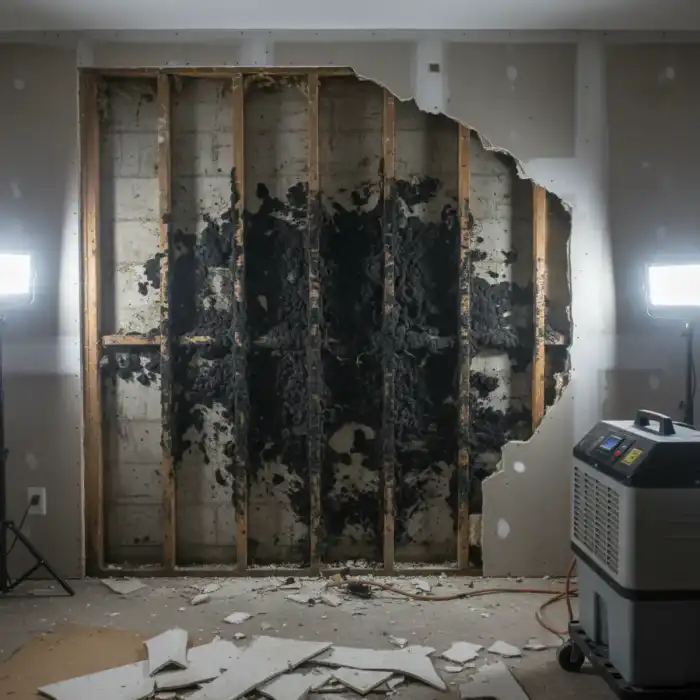
Finished basements are especially vulnerable to hidden mold because drywall provides an ideal food source. Mold feeds on the paper facing and organic binders in drywall, and it often grows on the backside of the panel where it is invisible from the living space.
Look for these subtle signs on basement drywall:
- Bubbling or peeling paint that is not explained by recent painting or adhesion issues
- Soft spots where the drywall gives slightly when pressed
- Yellowish or brownish stains that are not from a known spill or leak
- Baseboards that are pulling away from the wall or showing discoloration at the bottom edge
These signs indicate moisture is present behind the drywall, and where there is persistent moisture in a Connecticut basement, there is mold. The drywall acts as a food source and a hiding place, allowing colonies to grow for months behind a seemingly normal-looking wall.
5. Increased Allergy Symptoms Indoors
If household members experience worsening allergy symptoms such as sneezing, runny nose, itchy eyes, or congestion that improves when they leave the house, indoor mold is a likely culprit. This is especially telling if symptoms worsen in the evening, when you have been home for several hours and exposure has accumulated.
Children and elderly individuals are more susceptible to mold-related health effects. The Connecticut Department of Public Health notes that mold exposure can trigger asthma attacks, cause respiratory infections, and worsen existing lung conditions. If a family member has unexplained respiratory symptoms and your basement has any of the other signs on this list, a professional mold assessment is strongly recommended.
6. Rust on Metal Items Stored in the Basement
If tools, filing cabinets, holiday decorations, or other metal items stored in your basement are developing rust, your humidity levels are too high. Rust forms when relative humidity exceeds 65 percent and metal surfaces are exposed for extended periods. If your stored items are rusting, the same moisture conditions are supporting mold growth on organic materials throughout the space.
7. A Dehumidifier That Runs Constantly
If your basement dehumidifier fills its reservoir daily or runs continuously without bringing humidity below 50 percent, you have a moisture source that exceeds the dehumidifier's capacity. This usually means water is actively entering the basement through the foundation, floor, or from condensation. The dehumidifier is managing the symptom, but the underlying moisture source is feeding mold growth in areas the dehumidifier cannot reach, such as behind walls, inside wall cavities, and under flooring.
What to Do If You Suspect Hidden Mold
Do not start tearing open walls to look for mold. Disturbing an established mold colony without proper containment can release millions of spores into your home's air, spreading the problem to other areas and creating a health hazard.
Instead, contact a professional mold remediation company for an assessment. Professional assessments include moisture mapping with specialized meters, thermal imaging to identify moisture behind walls without opening them, and air quality testing that can detect elevated mold spore counts even when mold is not visible.
Restoration Control provides comprehensive mold inspections and remediation for Connecticut basements. Our IICRC-certified technicians use infrared cameras, professional moisture meters, and air sampling to find hidden mold without unnecessary demolition. If remediation is needed, we follow IICRC S520 standards with full containment to prevent cross-contamination. Call (833) 380-7378 for a free basement mold assessment.