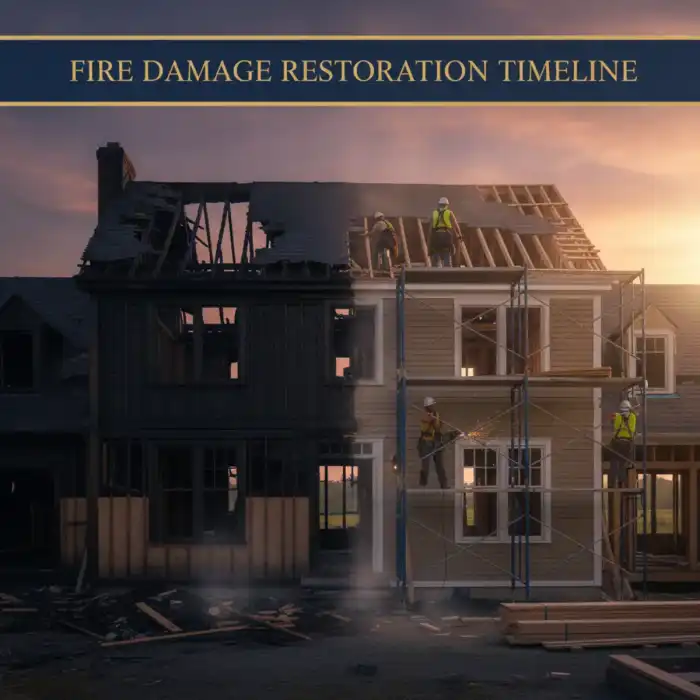
Experiencing a house fire is one of the most traumatic events a Connecticut homeowner can face. After the fire department leaves and the shock begins to wear off, the immediate question is: how long will it take to restore my home? The honest answer depends on the severity of the fire, but understanding the full restoration timeline helps you plan, set realistic expectations, and avoid costly mistakes during the process.
The Connecticut Fire Marshal's office reports approximately 4,000 residential fires annually across the state. Whether your fire was a small kitchen incident contained to one room or a structural fire that affected multiple floors, the restoration process follows the same fundamental phases. Here is what to expect.
Phase 1: Emergency Response and Board-Up (Days 1-3)
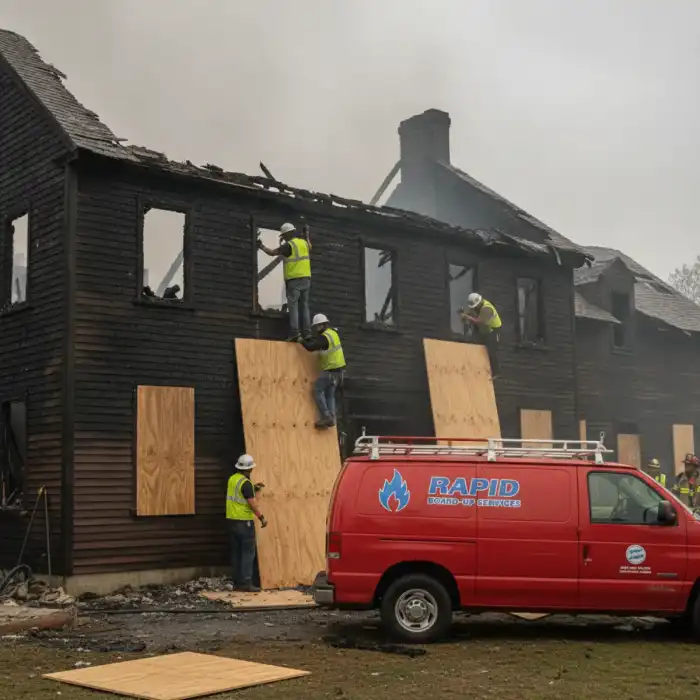
The restoration process begins before you even call a contractor. The fire department will determine when the structure is safe to enter and issue an incident report. In Connecticut, the local fire marshal must complete an investigation before restoration work can begin on fires that are classified as suspicious. For accidental fires, you can typically begin the emergency response process within 24 hours.
Emergency board-up and tarping is the first physical step. Broken windows, holes in the roof, and compromised doors must be secured to prevent weather damage, vandalism, and unauthorized entry. In Connecticut, this is especially critical during fall and winter when rain, snow, and freezing temperatures can cause severe secondary damage to a fire-compromised structure. Your insurance company expects you to take reasonable steps to prevent additional damage, and board-up costs are covered under most policies.
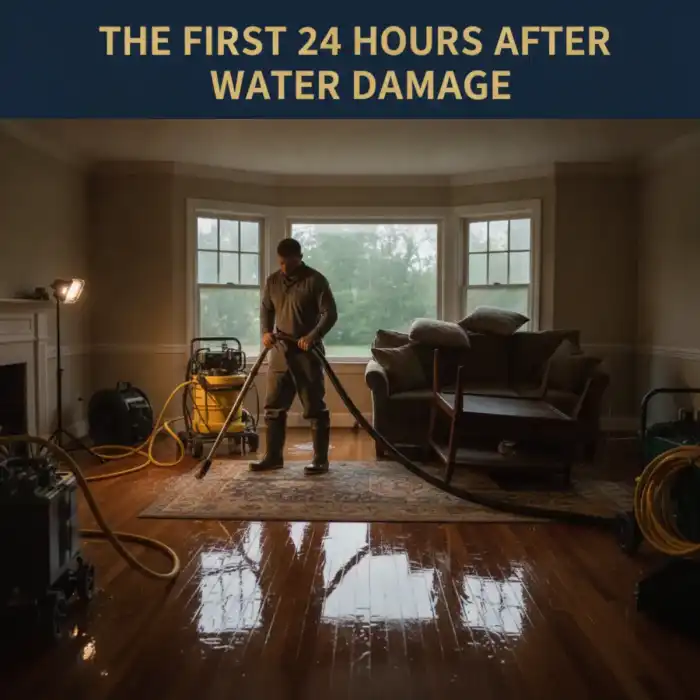
Water extraction is also an immediate priority. Fire hoses can put thousands of gallons of water into a home, and this water mixes with soot and chemicals to create a corrosive slurry that damages everything it touches. Professional extraction and initial drying should begin within the first 48 hours.
During this phase, you should also contact your insurance company to file a claim. Under Connecticut General Statutes Section 38a-816, your insurer must acknowledge your claim promptly. Document every conversation and keep a log of contacts.
Phase 2: Damage Assessment and Scope of Work (Days 3-7)
Once the structure is secured, a thorough damage assessment determines the full scope of restoration work. This is not a quick walkthrough. A proper assessment includes structural engineering evaluation, air quality testing, identification of hazardous materials, and a detailed room-by-room inventory of damage.
In Connecticut, homes built before 1978 may contain lead paint and asbestos, which require specialized handling during restoration. Under Connecticut's Lead Poisoning Prevention Act (CGS Section 19a-111) and EPA regulations, any disturbance of lead paint during restoration must be performed by EPA Lead-Safe certified renovators. Asbestos-containing materials, common in pipe insulation, floor tiles, and siding in older Connecticut homes, must be tested and removed by licensed asbestos abatement contractors before restoration proceeds.
The assessment also categorizes damage into three types:
- Direct fire damage: Areas destroyed by flames that require demolition and complete rebuilding
- Smoke and soot damage: Areas not touched by fire but affected by smoke, which can permeate drywall, insulation, ductwork, and every porous surface in the home
- Water damage: Areas affected by firefighting efforts, which often extends beyond the fire-damaged areas
Your restoration company and insurance adjuster will agree on a scope of work. At Restoration Control, we use Xactimate estimating software, the same platform your insurance company uses, to ensure alignment on pricing and scope from day one.
Phase 3: Soot and Smoke Removal (Weeks 1-3)
Smoke damage is invisible to many homeowners, but it is often the most pervasive damage in a fire. Smoke travels through the entire HVAC system, penetrates walls and ceilings far from the fire source, and leaves acidic residues that will permanently etch glass, corrode metals, and yellow painted surfaces if not treated quickly.
Professional smoke and soot removal involves:
- HVAC cleaning and sealing to prevent the system from recirculating soot particles throughout the home
- Dry sponge cleaning of walls, ceilings, and surfaces using specialized chemical sponges
- Wet cleaning with professional-grade degreasing solutions for heavily affected surfaces
- Content cleaning: Furniture, clothing, electronics, and personal items are inventoried and either cleaned on-site or packed out to a cleaning facility
- Thermal fogging or ozone treatment to neutralize smoke odor that has penetrated porous materials
Odor removal is one of the most challenging aspects of fire restoration. Smoke odor molecules bind to porous materials at a molecular level, and simple air fresheners or even commercial cleaning cannot eliminate them. Professional ozone generators, hydroxyl generators, and thermal foggers are necessary to truly neutralize smoke odor.
Phase 4: Demolition and Structural Repair (Weeks 3-8)
With hazardous materials removed and salvageable contents protected, demolition of fire-damaged structural components begins. This includes removing damaged drywall, insulation, flooring, cabinetry, and any structural lumber that has been compromised.
In Connecticut, all structural repairs must comply with the Connecticut State Building Code (CGS Section 29-252), and permits are required for structural work, electrical work, plumbing, and HVAC modifications. Your restoration company should handle all permitting through your local building department. Permit timelines vary by municipality. Towns like Greenwich and Fairfield often require two to three weeks for permit approval, while Hartford and New Haven typically process within one to two weeks.
Structural framing, electrical rewiring, plumbing repairs, and HVAC replacement happen during this phase. Connecticut requires licensed contractors for all electrical (E-1 or E-2 license) and plumbing (P-1 or P-2 license) work, and inspections are required at multiple stages before walls can be closed up.
Phase 5: Rebuild and Finishing (Weeks 8-16)
The rebuild phase transforms your home from a gutted shell back into a livable space. This includes drywall installation and finishing, painting, flooring installation, cabinetry, fixture installation, and all finish carpentry.
The timeline for this phase depends heavily on the scope of damage and material availability. Custom cabinetry, specialty flooring, and specific fixtures can add weeks to the timeline. One advantage of working with an experienced restoration company is that we maintain relationships with suppliers and can often expedite materials that would take homeowners weeks to source.
Final inspections by the local building department, a certificate of occupancy if required, and a thorough final cleaning complete the process.
Total Timeline Summary
- Minor fire (single room, limited smoke): 4 to 6 weeks
- Moderate fire (multiple rooms, significant smoke): 8 to 12 weeks
- Major structural fire: 16 to 24 weeks or more
These timelines assume no significant delays from insurance, permitting, or material availability. In practice, insurance disputes and permitting delays are the most common causes of extended timelines in Connecticut.
Restoration Control Is Here to Help
Restoration Control guides Connecticut homeowners through every phase of fire damage restoration. From the first emergency board-up call to the final walkthrough of your rebuilt home, we manage the entire process including insurance coordination, permitting, and construction. Our IICRC-certified fire and smoke restoration technicians have restored homes across Hartford, New Haven, Stamford, Bridgeport, and communities throughout the state. Call (833) 380-7378 any time, day or night, for immediate fire damage assistance.