Professional Roofing Services — Licensed CT Contractor
Roofing in New Britain
New Britain's roofing stock is dominated by the multi-family housing built during the city's peak as America's Hardware City — three-deckers and two-family homes from the 1880s through 1930s line the streets of Broad Street, the East Side, and the South End, their flat and low-slope roofs a constant challenge in a city that averages 44 inches of snow annually. New Britain sits on elevated terrain between the Mattabesset and Pequabuck River valleys, creating wind exposure that coastal cities avoid during nor'easters tracking inland. The housing density that served Stanley Works and P&R Manufacturing workers means rooflines are close together, where a wind-driven shingle failure on one building drops debris onto the neighbor's roof. CCSU's student rental housing stock in the neighborhoods surrounding campus adds urgency — multi-family buildings operating as student rentals face heavy occupancy wear and deferred maintenance that accelerates roofing deterioration. Our New Britain roofing crews understand the specific challenges of the city's dominant building type: flat and low-slope membrane roofs on three-story buildings where ice loading, ponding, and flashing failure at parapet walls are the primary failure modes, requiring commercial-grade materials and installation techniques that standard residential roofers may not provide.
“After a burst pipe flooded our basement during a January freeze, Restoration Control arrived within an hour. Their team was professional, thorough, and kept us informed every step of the way. They handled our insurance claim and had our home restored in under two weeks. We could not have asked for a better experience.”
Robert & Linda M.
Hartford, CT
“A nor'easter ripped shingles off our Shippan Point home and water was pouring into the attic. Restoration Control had a crew on our roof the next morning, tarped the damage, and completed a full replacement within the week. Their knowledge of coastal roofing materials made all the difference.”
Jennifer S.
Stamford, CT
“We hired Restoration Control to replace the original siding on our 1920s Colonial in East Rock. They matched the historic character perfectly while upgrading to fiber cement that will actually withstand Connecticut winters. The craftsmanship is outstanding and the crew was respectful of our neighborhood.”
David & Maria T.
New Haven, CT
“After a kitchen fire, we were devastated. Restoration Control not only restored our home but helped us navigate the insurance process from start to finish. Their fire damage team removed all smoke odor and rebuilt our kitchen better than before. True professionals who treated us like family.”
Thomas K.
Bridgeport, CT
Frequently Asked Questions
Need Roofing in New Britain?
Call now for a free estimate. Our New Britain team responds within 60–90 minutes, 24 hours a day, 7 days a week.
New Britain's roofing stock is dominated by the multi-family housing built during the city's peak as America's Hardware City — three-deckers and two-family homes from the 1880s through 1930s line the streets of Broad Street, the East Side, and the South End, their flat and low-slope roofs a constant challenge in a city that averages 44 inches of snow annually. New Britain sits on elevated terrain between the Mattabesset and Pequabuck River valleys, creating wind exposure that coastal cities avoid during nor'easters tracking inland. The housing density that served Stanley Works and P&R Manufacturing workers means rooflines are close together, where a wind-driven shingle failure on one building drops debris onto the neighbor's roof. CCSU's student rental housing stock in the neighborhoods surrounding campus adds urgency — multi-family buildings operating as student rentals face heavy occupancy wear and deferred maintenance that accelerates roofing deterioration. Our New Britain roofing crews understand the specific challenges of the city's dominant building type: flat and low-slope membrane roofs on three-story buildings where ice loading, ponding, and flashing failure at parapet walls are the primary failure modes, requiring commercial-grade materials and installation techniques that standard residential roofers may not provide.
Common Roofing Problems in New Britain
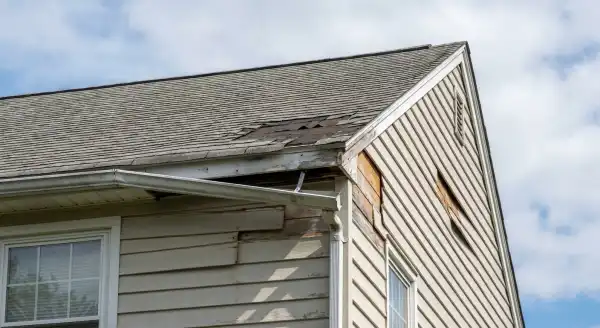
Flat-roof ponding and membrane failure on New Britain's three-deckers is the city's most persistent roofing problem. These buildings were designed with minimal roof slope that has further diminished as framing deflects over a century of use — standing water on modified-bitumen and built-up roofs accelerates membrane breakdown and adds structural load. A 2-inch pond on a 25x40 flat roof weighs over 5,000 pounds. Parapet wall flashing failure is the second major flat-roof issue — the junction where the roof membrane meets the parapet cap is New Britain's most common leak source on multi-family buildings, and the freeze-thaw cycling that New Britain's inland location delivers (85-plus cycles annually) works at every sealed joint until water finds its way through. Ice dam formation on the pitched-roof homes in Walnut Hill, the West End, and Shuttle Meadow is severe because these older homes have attic insulation well below code requirements. Wind damage from inland nor'easters strips shingle tabs and lifts flashing — New Britain's elevation and open terrain exposure means wind loads during major storms exceed what the sheltered river valleys to the east and west experience. Chimney flashing failure on New Britain's brick-chimney homes produces single-point leaks that cause disproportionate interior damage when water channels along rafters and emerges far from the actual entry point.
Roofing Regulations in New Britain, CT
Roofing permits in New Britain are filed through the Building Department at 27 West Main Street. A permit is required for roof replacement and significant repairs. Applications require CT HIC registration, liability and workers' compensation insurance, and scope description. Connecticut building code requires ice-and-water shield from eave to 24 inches past interior wall line — critical in New Britain's 44-inch snow market where ice dams are annual events. Two-layer maximum for re-roofing; third layer requires tear-off to decking. New Britain's downtown has locally designated historic areas where preservation review may apply — the city's Heritage and Design Review Committee reviews exterior changes on designated properties. CCSU-area rental properties must comply with city rental registration and inspection requirements, and roofing conditions are part of the rental inspection protocol. New Britain requires contractors to obtain a dumpster permit for roll-off containers placed on city streets during tear-off projects. Inspections are conducted by city building inspectors at completion. Multi-family roofing projects on buildings with three or more units may trigger commercial building code requirements for fire-rated roofing assemblies.
Roofing by Neighborhood in New Britain
The Broad Street corridor has New Britain's densest concentration of three-decker buildings and the most intensive flat-roof replacement need in the city. Buildings here were constructed for factory workers in rapid succession during the 1890s-1920s, with flat roofs that have been patched, recoated, and overlaid for a century — many need complete tear-off to structural decking and new TPO or EPDM membrane systems. The East Side mirrors Broad Street's building type and vintage with slightly less density. The South End has a mix of multi-family and single-family housing where flat-roof and pitched-roof work exist on the same block. Walnut Hill is New Britain's most established residential neighborhood — 1920s-1940s colonials and capes with pitched roofs where standard architectural shingle replacement is the typical scope, combined with older Victorian homes that may have original slate requiring specialized repair or replacement. The West End has similar vintage and housing types. Shuttle Meadow, in the southwestern portion of the city, has New Britain's newest and most widely spaced housing — 1960s-1980s colonials and ranches where reroof projects are straightforward with good access and standard material specifications. The CCSU campus area has student rental housing where roofing maintenance is often deferred, creating conditions where emergency leak repair rather than planned replacement becomes the norm — we encourage landlords in this area to schedule proactive inspection and replacement.
Why New Britain Needs Professional Roofing
New Britain's roofing urgency reflects the convergence of industrial-era multi-family housing stock with Connecticut's demanding climate — flat roofs that were adequate when maintained by factory owners have deteriorated under decades of fragmented ownership and deferred maintenance. The city's 44 inches of annual snow creates ice loading that stresses every flat roof, and the freeze-thaw cycling at New Britain's inland elevation (85-plus cycles) works at every flashing joint and membrane seam through the winter. New Britain's ongoing downtown revitalization and neighborhood investment makes building condition increasingly important for property values, and roof failure that causes interior water damage cascades into costs that far exceed planned replacement. For multi-family property owners, roof condition directly affects rental income, habitability compliance, and insurance availability — carriers are increasingly requiring documented roof condition assessments for multi-family policies. Annual inspection — in spring after snow season and in fall before winter — catches deterioration while it can be addressed with targeted repair rather than emergency replacement. The energy case is strong in New Britain's older housing: proper roof insulation reduces heating costs in a city where many homes still have R-11 or less in the attic, far below the R-49 code requirement.
What's Included in Our New Britain Roofing Service
Full roof inspection with photo documentation
Architectural shingle, metal, tile, and flat roofing systems
Underlayment, ice and water shield, and ventilation upgrades
Drip edge, flashing, ridge cap, and all trim components
Manufacturer warranty on materials, contractor warranty on labor
Complete debris cleanup and haul-away after installation
Why New Britain Homeowners Choose Restoration Control for Roofing
Licensed CT contractor — active state license verifiable online
IICRC-certified technicians with manufacturer-authorized installation training
Free on-site inspection and written estimate with no obligation in New Britain
Full insurance claims support — documentation, Xactimate estimates, adjuster meetings
In-house crews only — no unlicensed subcontractors on your New Britain project
Workmanship warranty backed by a company with 10+ years in Connecticut
24/7 emergency line for storm, water, and fire damage in New Britain
BBB Accredited with A+ rating and 4.9-star average from 250+ reviews
Most residential roof replacements are completed in 1-2 days. Larger or more complex roofs with multiple pitches, dormers, or steep slopes may take 2-3 days. We work weather-dependent and keep your home protected at all times.
Will my homeowner's insurance cover a new roof?
If your roof was damaged by wind, hail, or a storm event, your homeowner's insurance typically covers replacement minus your deductible. Restoration Control works directly with insurance adjusters and can document damage, provide photo evidence, and write estimates in the format your insurer requires.
What roofing materials do you install?
We install architectural asphalt shingles (GAF, CertainTeed, Owens Corning), standing-seam metal, clay and concrete tile, modified bitumen flat roofing, and TPO/EPDM commercial membranes. We'll recommend the best system for your home's structure, climate, and budget.
Request Roofing in New Britain, CT
Call (833) 380-7378 or complete the form below. A licensed CT estimator will contact you within 1 business hour to schedule your free on-site inspection.