Professional Siding Services — Licensed CT Contractor
Siding in Vernon
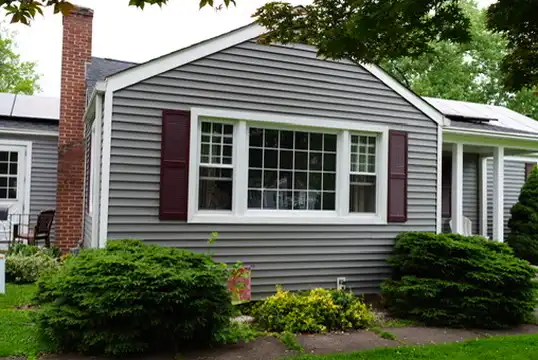
Vernon's siding landscape spans from Rockville's Victorian clapboard and decorative shingles to the suburban vinyl and aluminum overlays that dominate the post-war neighborhoods along Tunnel Road and Vernon Center. Rockville's mill-era worker housing along Union Street, Market Street, and East Main Street was built between 1870 and 1920 with narrow-exposure wood clapboard and ornamental shingle patterns — fish-scale gable details, turned porch posts, and bracketed cornices that define Rockville's distinctive architectural character. Much of this original siding has been overlaid with aluminum or vinyl since the 1960s, concealing both the architectural detail and whatever moisture damage accumulated beneath during decades of sealed wall cavities.
The post-war neighborhoods along Tunnel Road, Route 83, and Vernon Center received standard wood or asbestos-cement siding that was overlaid with first-generation aluminum or vinyl by the early 1980s. These 40-to-50-year-old overlays are now failing throughout Vernon — faded, brittle, dented, and concealing decades of trapped moisture damage. Vernon's elevated position at 400 to 600 feet creates siding conditions more severe than lower Hartford suburbs: freeze-thaw cycling is more frequent and more intense, ice build-up at foundation lines persists longer through the winter, and shaded north-facing surfaces stay damp well into spring because of the colder temperatures at elevation.
The Tankerhoosen River corridor through Vernon adds humidity that promotes mildew and algae growth on shaded siding surfaces, particularly on north-facing walls under mature tree canopy where surfaces may stay damp for days after rain events.
“After a burst pipe flooded our basement during a January freeze, Restoration Control arrived within an hour. Their team was professional, thorough, and kept us informed every step of the way. They handled our insurance claim and had our home restored in under two weeks. We could not have asked for a better experience.”
Robert & Linda M.
Hartford, CT
“A nor'easter ripped shingles off our Shippan Point home and water was pouring into the attic. Restoration Control had a crew on our roof the next morning, tarped the damage, and completed a full replacement within the week. Their knowledge of coastal roofing materials made all the difference.”
Jennifer S.
Stamford, CT
“We hired Restoration Control to replace the original siding on our 1920s Colonial in East Rock. They matched the historic character perfectly while upgrading to fiber cement that will actually withstand Connecticut winters. The craftsmanship is outstanding and the crew was respectful of our neighborhood.”
David & Maria T.
New Haven, CT
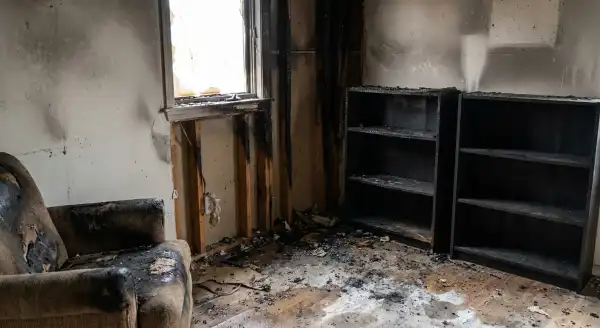
“After a kitchen fire, we were devastated. Restoration Control not only restored our home but helped us navigate the insurance process from start to finish. Their fire damage team removed all smoke odor and rebuilt our kitchen better than before. True professionals who treated us like family.”
Thomas K.
Bridgeport, CT
Frequently Asked Questions
Need Siding in Vernon?
Call now for a free estimate. Our Vernon team responds within 60–90 minutes, 24 hours a day, 7 days a week.
Vernon's siding landscape spans from Rockville's Victorian clapboard and decorative shingles to the suburban vinyl and aluminum overlays that dominate the post-war neighborhoods along Tunnel Road and Vernon Center. Rockville's mill-era worker housing along Union Street, Market Street, and East Main Street was built between 1870 and 1920 with narrow-exposure wood clapboard and ornamental shingle patterns — fish-scale gable details, turned porch posts, and bracketed cornices that define Rockville's distinctive architectural character. Much of this original siding has been overlaid with aluminum or vinyl since the 1960s, concealing both the architectural detail and whatever moisture damage accumulated beneath during decades of sealed wall cavities.
The post-war neighborhoods along Tunnel Road, Route 83, and Vernon Center received standard wood or asbestos-cement siding that was overlaid with first-generation aluminum or vinyl by the early 1980s. These 40-to-50-year-old overlays are now failing throughout Vernon — faded, brittle, dented, and concealing decades of trapped moisture damage. Vernon's elevated position at 400 to 600 feet creates siding conditions more severe than lower Hartford suburbs: freeze-thaw cycling is more frequent and more intense, ice build-up at foundation lines persists longer through the winter, and shaded north-facing surfaces stay damp well into spring because of the colder temperatures at elevation.
The Tankerhoosen River corridor through Vernon adds humidity that promotes mildew and algae growth on shaded siding surfaces, particularly on north-facing walls under mature tree canopy where surfaces may stay damp for days after rain events.
Common Siding Problems in Vernon
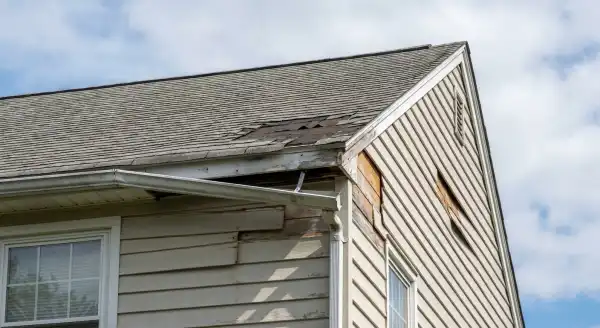
First-generation overlay failure and the concealed damage beneath are Vernon's dominant siding issues. Aluminum siding from the 1970s has oxidized beyond cleaning — the chalky surface contaminates landscaping and clothing, and the softened metal dents permanently from even minor hail impacts. Vinyl siding from the 1980s cracks during cold snaps at Vernon's elevated temperatures that run three to five degrees colder than Hartford, accelerating the brittleness that UV degradation has already created over 40 years of exposure.
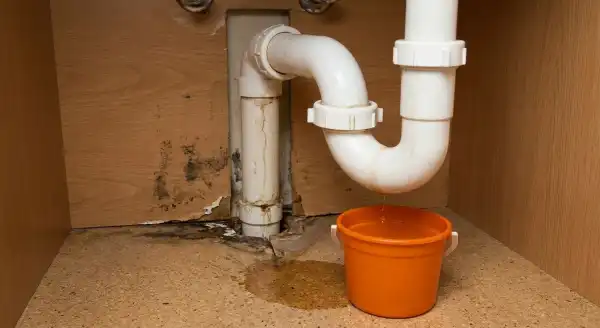
Beneath these aging overlays, we consistently find original siding that was never properly removed or prepared before the overlay was installed — no house wrap, no moisture barrier, just new siding nailed over old. Moisture from interior humidity, ice dam leakage, and window flashing failures had no outward drying path for four decades, and the result is rotted sheathing, corroded original fasteners, and in pre-1978 homes, deteriorating lead paint layers that trigger EPA RRP requirements during removal.
Rockville's multi-family homes present the most complex siding conditions in Vernon: three-story buildings with decorative details under multiple overlay layers, asbestos-cement original siding requiring testing and potential abatement, and structural repairs reflecting a century of varied maintenance quality. Foundation splash-back damage is more severe in Vernon than in lower Hartford suburbs because longer freeze periods mean snow banking against lower siding courses persists well into March and even April, continuously wicking moisture into wall cavities from below.
Siding Regulations in Vernon, CT
Siding permits in Vernon are required for removal down to wall sheathing through the Building Department at Town Hall, 14 Park Place. Overlay installations that leave existing siding in place generally do not trigger a permit requirement. Connecticut energy code mandates insulation to current standards when siding is removed to the sheathing — R-13 minimum for 2x4 wall cavities, with most contractors recommending dense-pack cellulose at R-15 for superior air sealing and thermal performance. The energy upgrade is particularly valuable at Vernon's elevation where more heating degree days translate directly to higher utility costs.
EPA RRP compliance is required for all pre-1978 homes — certified renovators must use containment procedures and proper disposal protocols for lead-contaminated debris. Asbestos-cement siding testing is mandatory before removal on homes built before 1960 — positive results require licensed abatement under Connecticut DEEP regulations. Connecticut HIC registration is required for all siding contractors. Rockville historic properties, particularly those listed on the National Register of Historic Places, may have deed restrictions or grant obligations that affect exterior material choices and profiles.
Siding by Neighborhood in Vernon
Rockville's Union Street, Market Street, and East Main Street neighborhoods require the most architecturally sensitive siding work in Vernon — restoring the Victorian-era narrow clapboard profiles and decorative details that have been concealed beneath decades of aluminum and vinyl overlays. When these overlays are properly removed and the original architectural details are either restored or replicated in modern fiber-cement, the transformation is dramatic and the neighborhood's historic character is visibly revived.
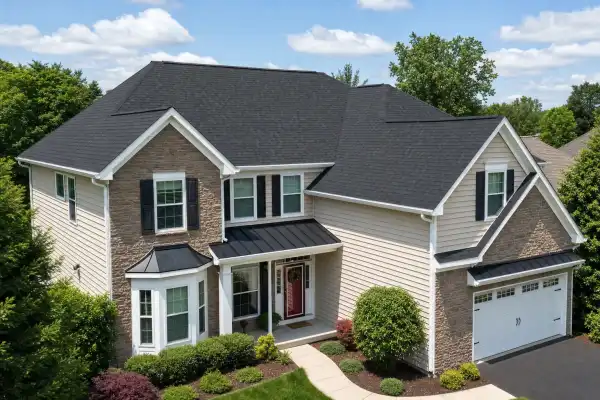
The Tunnel Road and Phoenix Street corridor is Vernon's highest-volume siding market with uniform post-war homes creating predictable scope — similar configurations, similar concealed damage patterns, and similar material requirements that allow efficient scheduling and execution. Vernon Center has 1960s-1970s colonials with combination siding — vinyl on upper stories with brick or stone veneer foundation courses — requiring careful integration where different materials meet. Box Mountain and Bolton Road have larger homes on elevated, exposed lots where premium fiber-cement or insulated vinyl matches both the neighborhood standard and the wind-resistance requirements of the hilltop location.
Why Vernon Needs Professional Siding
Vernon's siding replacement delivers energy savings amplified by the town's colder microclimate at elevation — more heating degree days than Hartford, Manchester, or East Hartford means the thermal upgrade from proper siding replacement with insulation is proportionally more valuable in Vernon than in any lower suburb. Modern insulated siding combined with dense-pack wall insulation during the strip phase can reduce heating costs by 15 to 20 percent, and at Vernon's higher baseline heating expense, that 15 to 20 percent represents more dollars saved per year than the same percentage at a lower-elevation home.
The concealed damage beneath 40-year-old overlays progresses faster in Vernon than in lower towns — freeze-thaw cycling at elevation mechanically damages rotting sheathing more aggressively, and the longer winter means moisture remains trapped in wall cavities for more months per year. Every year of deferral means more extensive sheathing repair and higher total project cost. Vernon's real estate market, competing with Manchester, South Windsor, and Ellington for suburban families, rewards updated exteriors with faster sales and measurably higher prices.
What's Included in Our Vernon Siding Service
Full siding inspection and damage assessment
Vinyl, fiber cement, engineered wood, and cedar options
Moisture barrier and house wrap installation
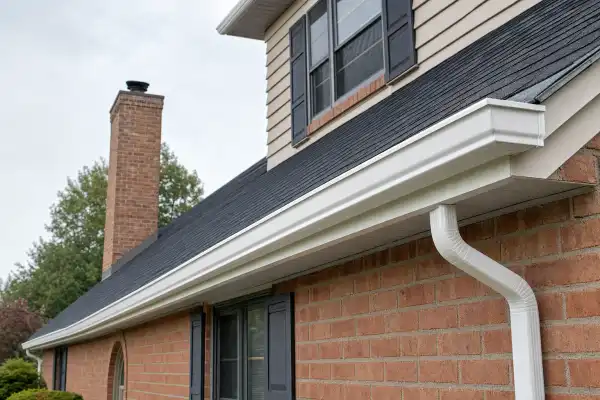
Trim, corner posts, J-channel, and soffit/fascia work
Energy-efficient insulated siding available
Paint-matched caulking and sealed penetrations
Why Vernon Homeowners Choose Restoration Control for Siding
Licensed CT contractor — active state license verifiable online
IICRC-certified technicians with manufacturer-authorized installation training
Free on-site inspection and written estimate with no obligation in Vernon
Full insurance claims support — documentation, Xactimate estimates, adjuster meetings
In-house crews only — no unlicensed subcontractors on your Vernon project
Workmanship warranty backed by a company with 10+ years in Connecticut
24/7 emergency line for storm, water, and fire damage in Vernon
BBB Accredited with A+ rating and 4.9-star average from 250+ reviews
Fiber cement siding (James Hardie) is the most durable option, with a 30-year warranty and resistance to rot, insects, and fire. Vinyl siding is lower-cost with a 20-25 year lifespan. Engineered wood siding offers natural aesthetics with improved durability over traditional wood.
Can you match my existing siding after storm damage?
In many cases yes — we stock a wide range of profiles, colors, and textures. For discontinued products, we work closely with manufacturers to find the closest match. For major damage, a full replacement often provides a better long-term result and uniform appearance.
Does new siding improve energy efficiency?
Yes. Insulated vinyl and fiber cement siding can reduce thermal bridging and improve wall R-values. Combined with new house wrap and sealed penetrations, properly installed siding can noticeably lower heating and cooling costs.
Request Siding in Vernon, CT
Call (833) 380-7378 or complete the form below. A licensed CT estimator will contact you within 1 business hour to schedule your free on-site inspection.