Professional Roofing Services — Licensed CT Contractor
Roofing in Shelton
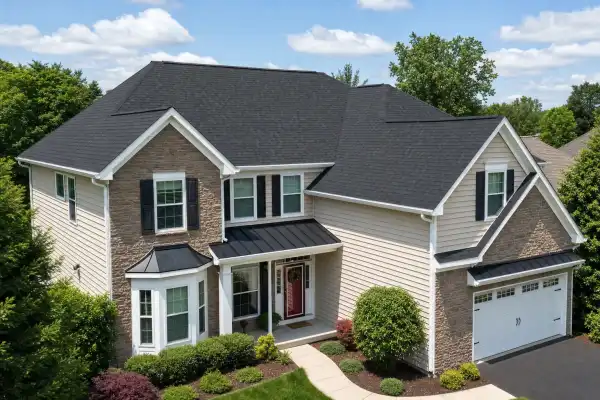
Shelton's roofing environment is defined by the Housatonic River valley's dramatic terrain — the city rises steeply from the river's eastern bank to the elevated neighborhoods of Huntington, White Hills, and Long Hill, creating a topographic range where valley-floor homes face river humidity and flood risk while hilltop properties take the full force of inland storm winds. The Housatonic River, Connecticut's second-largest, runs along Shelton's western border and historically powered the mills that built the downtown — today that river proximity adds humidity that keeps roofing materials damp longer than elevated locations, promoting moss and algae growth on shaded slopes. The housing stock reflects Shelton's evolution from mill town to commuter suburb: downtown along the river has older multi-family buildings from the late 1800s and early 1900s with flat and low-slope roofs, Huntington (Shelton's historic center on the hilltop) has a mix of colonial-era homes and mid-century development, White Hills has consistent 1960s-1970s suburban housing, and Long Hill in the north has newer construction from the 1980s through 2000s. Shelton averages 40 inches of snow — more than coastal Fairfield County towns just miles south — and 48 inches of rain, with the river valley collecting cold air that intensifies freeze-thaw cycling on valley-floor properties. Our Shelton roofing specifications account for the elevation divide: commercial-grade membrane systems for downtown's flat-roof multi-family buildings, premium architectural shingle with robust ventilation for the suburban neighborhoods, and materials rated for the higher wind loads that Huntington's and White Hills' exposed hilltop positions demand.
“After a burst pipe flooded our basement during a January freeze, Restoration Control arrived within an hour. Their team was professional, thorough, and kept us informed every step of the way. They handled our insurance claim and had our home restored in under two weeks. We could not have asked for a better experience.”
Robert & Linda M.
Hartford, CT
“A nor'easter ripped shingles off our Shippan Point home and water was pouring into the attic. Restoration Control had a crew on our roof the next morning, tarped the damage, and completed a full replacement within the week. Their knowledge of coastal roofing materials made all the difference.”
Jennifer S.
Stamford, CT
“We hired Restoration Control to replace the original siding on our 1920s Colonial in East Rock. They matched the historic character perfectly while upgrading to fiber cement that will actually withstand Connecticut winters. The craftsmanship is outstanding and the crew was respectful of our neighborhood.”
David & Maria T.
New Haven, CT
“After a kitchen fire, we were devastated. Restoration Control not only restored our home but helped us navigate the insurance process from start to finish. Their fire damage team removed all smoke odor and rebuilt our kitchen better than before. True professionals who treated us like family.”
Thomas K.
Bridgeport, CT
Frequently Asked Questions
Need Roofing in Shelton?
Call now for a free estimate. Our Shelton team responds within 60–90 minutes, 24 hours a day, 7 days a week.
Shelton's roofing environment is defined by the Housatonic River valley's dramatic terrain — the city rises steeply from the river's eastern bank to the elevated neighborhoods of Huntington, White Hills, and Long Hill, creating a topographic range where valley-floor homes face river humidity and flood risk while hilltop properties take the full force of inland storm winds. The Housatonic River, Connecticut's second-largest, runs along Shelton's western border and historically powered the mills that built the downtown — today that river proximity adds humidity that keeps roofing materials damp longer than elevated locations, promoting moss and algae growth on shaded slopes. The housing stock reflects Shelton's evolution from mill town to commuter suburb: downtown along the river has older multi-family buildings from the late 1800s and early 1900s with flat and low-slope roofs, Huntington (Shelton's historic center on the hilltop) has a mix of colonial-era homes and mid-century development, White Hills has consistent 1960s-1970s suburban housing, and Long Hill in the north has newer construction from the 1980s through 2000s. Shelton averages 40 inches of snow — more than coastal Fairfield County towns just miles south — and 48 inches of rain, with the river valley collecting cold air that intensifies freeze-thaw cycling on valley-floor properties. Our Shelton roofing specifications account for the elevation divide: commercial-grade membrane systems for downtown's flat-roof multi-family buildings, premium architectural shingle with robust ventilation for the suburban neighborhoods, and materials rated for the higher wind loads that Huntington's and White Hills' exposed hilltop positions demand.
Common Roofing Problems in Shelton
Hillside wind damage is Shelton's most distinctive roofing challenge — homes on the ridgeline along Huntington and White Hills face unobstructed wind from the west and northwest that funnels up the Housatonic River valley during nor'easters, producing wind loads that valley-floor downtown properties rarely experience. Ridge cap shingles, rake edges, and any raised flashing on these exposed hilltop homes take the worst abuse. Ice dam formation affects the older housing throughout Shelton but is most severe in downtown's multi-family buildings and Huntington's pre-1960 homes where attic insulation falls well below the R-49 code standard — the river valley's cold-air pooling extends freeze duration on lower-elevation properties, intensifying ice dam severity. Flat-roof ponding failure on downtown's mill-era buildings follows the familiar pattern of deflected framing, lost pitch, and standing water that accelerates membrane breakdown. Moss and algae growth on shaded north-facing roof slopes is prevalent throughout the river corridor where the Housatonic's humidity and the valley's shade keep surfaces damp for hours after morning dew. Tree impact from Shelton's extensive forest canopy — the northern sections toward Long Hill are heavily wooded — drops limbs during wind events with enough force to penetrate roof sheathing. Valley flashing failure on Huntington's colonial rooflines is a persistent leak source where original lead or galvanized flashing has corroded after 40 to 60 years. Steep hillside terrain creates access challenges for roofing crews on some properties — homes built into Shelton's slopes may have 30-foot ground-to-eave height on the downhill side of a single-story structure.
Roofing Regulations in Shelton, CT
Roofing permits in Shelton are filed through the Building Department at City Hall, 54 Hill Street. A permit is required for roof replacement and significant repairs. Applications require CT HIC registration, proof of liability and workers' compensation insurance, and scope description. Connecticut building code mandates ice-and-water shield from eave to 24 inches past the interior wall line. Two-layer maximum for re-roofing. Shelton's Planning and Zoning Commission may have jurisdiction on roofing projects that affect the visual character of the downtown historic area — the city has invested significantly in downtown revitalization and building appearance is part of that effort. Inland Wetlands Commission review may apply to roofing projects on properties near the Housatonic River, Far Mill River, or their tributaries if the work involves changes that could affect stormwater runoff into protected waterways. Dumpster permits are required for containers placed on city streets. The steep hillside terrain in portions of Shelton may require specialized staging and access equipment — building officials can require demonstration of safe work access for roofing projects on difficult terrain. Inspections are conducted at project completion by city building inspectors.
Roofing by Neighborhood in Shelton
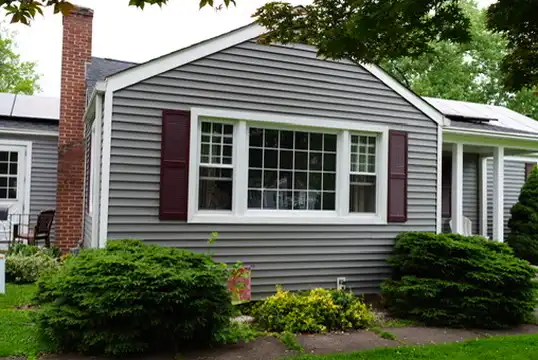
Downtown Shelton along the Housatonic River has the city's oldest and most diverse roofing stock — mill-era multi-family buildings with flat and low-slope roofs requiring commercial membrane systems, scattered Victorian-era homes with steep-pitched roofs and complex dormers, and mixed-use buildings along Howe Avenue that have both commercial and residential roofing needs. The river proximity adds humidity that accelerates material degradation on flat-roof surfaces. Huntington, perched on the hilltop above downtown, is Shelton's historic center with a mix of colonial-era homes, Victorian-period houses around the Huntington Green, and post-war colonials and capes — roofing scope varies widely by building era, from slate repair on the oldest structures to standard dimensional shingle on mid-century housing. The hilltop exposure means wind loads are higher than in the sheltered river valley. White Hills has Shelton's most consistent suburban roofing market — 1960s-1970s colonials and raised ranches on moderate lots where architectural shingle replacement with improved ventilation follows predictable patterns. Good access and consistent housing make White Hills the most efficient roofing scope in Shelton. Long Hill in the north has newer construction from the 1980s through 2000s on larger wooded lots — roofing materials are younger and may still have useful life, but the heavy tree canopy creates debris management and access challenges that older neighborhoods on cleared lots don't face. The Route 8 corridor has some commercial and industrial roofing needs distinct from the residential market.
Why Shelton Needs Professional Roofing
Shelton's roofing investment reflects the city's terrain diversity — hilltop properties face wind exposure that demands premium specifications while valley-floor properties deal with humidity, ice dams, and the flat-roof challenges of the city's mill-era building stock. The elevation difference across Shelton is dramatic enough to create meaningfully different roofing environments within the same city: a home in White Hills at 400 feet elevation faces different wind, snow, and temperature conditions than a downtown building at 50 feet near the Housatonic. Connecticut's high energy costs make attic insulation improvement during reroofing compelling for all of Shelton's pre-1980 housing — the R-49 standard that eliminates ice dams also reduces heating costs by 15 to 25 percent. Shelton's real estate market — positioned as a more affordable alternative to neighboring Monroe and Trumbull while still in Fairfield County — responds to building condition as a primary value factor. The city's ongoing downtown revitalization makes property maintenance in the river corridor particularly important as investment in the area grows. Annual roof inspection is essential in Shelton's varied terrain: spring assessment catches ice dam damage and wind effects from winter storms, while fall inspection verifies the roof is prepared for the snow season ahead.
What's Included in Our Shelton Roofing Service
Full roof inspection with photo documentation
Architectural shingle, metal, tile, and flat roofing systems
Underlayment, ice and water shield, and ventilation upgrades
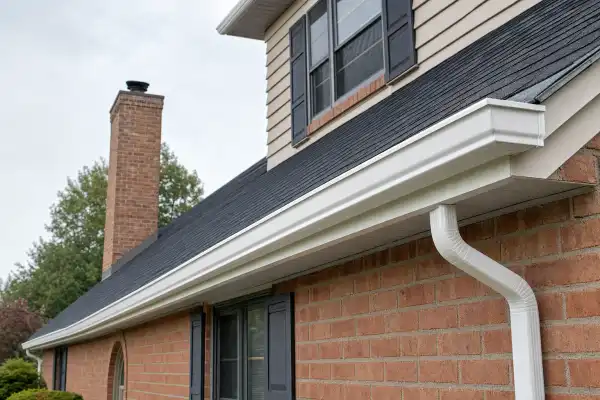
Drip edge, flashing, ridge cap, and all trim components
Manufacturer warranty on materials, contractor warranty on labor
Complete debris cleanup and haul-away after installation
Why Shelton Homeowners Choose Restoration Control for Roofing
Licensed CT contractor — active state license verifiable online
IICRC-certified technicians with manufacturer-authorized installation training
Free on-site inspection and written estimate with no obligation in Shelton
Full insurance claims support — documentation, Xactimate estimates, adjuster meetings
In-house crews only — no unlicensed subcontractors on your Shelton project
Workmanship warranty backed by a company with 10+ years in Connecticut
24/7 emergency line for storm, water, and fire damage in Shelton
BBB Accredited with A+ rating and 4.9-star average from 250+ reviews
Most residential roof replacements are completed in 1-2 days. Larger or more complex roofs with multiple pitches, dormers, or steep slopes may take 2-3 days. We work weather-dependent and keep your home protected at all times.
Will my homeowner's insurance cover a new roof?
If your roof was damaged by wind, hail, or a storm event, your homeowner's insurance typically covers replacement minus your deductible. Restoration Control works directly with insurance adjusters and can document damage, provide photo evidence, and write estimates in the format your insurer requires.
What roofing materials do you install?
We install architectural asphalt shingles (GAF, CertainTeed, Owens Corning), standing-seam metal, clay and concrete tile, modified bitumen flat roofing, and TPO/EPDM commercial membranes. We'll recommend the best system for your home's structure, climate, and budget.
Request Roofing in Shelton, CT
Call (833) 380-7378 or complete the form below. A licensed CT estimator will contact you within 1 business hour to schedule your free on-site inspection.